

Best Cotton Fabric for Dressmaking: 9 Top Picks for 2026
Table of Contents
- Quick Comparison: Best Cotton Fabrics for Dressmaking
- How to Choose the Right Cotton Fabric for Your Dress Project
- 1. Kona Cotton Solid by Robert Kaufman: Best All-Rounder
- 2. Stof Basic Harmony Pastel: Best for Soft, Subtle Prints
- 3. Makower UK Solid Spectrum: Best Budget Plain Cotton
- 4. Liberty Fabric Emily Silhouette: Best for Special Occasion Dresses
- 5. Fabric Freedom Floral Print: Best for Summer Dresses
- 6. Moda Grunge by BasicGrey: Best for Structured Garments
- 7. Dashwood Jersey: Best Cotton Blend for Stretch Dresses
- Cotton Lawn vs Poplin for Dresses: Which Should You Choose?
- Preparing Your Cotton Before You Cut
- Frequently Asked Questions
Last Updated: September 10, 2026
Quick Comparison: Best Cotton Fabrics for Dressmaking
Choosing the best cotton fabric for dressmaking comes down to matching weight, weave and drape to the garment you have in mind, and the seven fabrics below cover nearly every dress project. At Fabric Mouse, a family-run sewing shop that has been trading since 1922, we understand the challenges dressmakers face when choosing fabric. The short answer: a medium-weight solid cotton handles most dresses, lawn and poplin suit warm-weather styles, and jersey is the one to pick when you want stretch.
Here is how the key options compare before we go into detail:
| Fabric | Weight | Weave | Best Garment | Price per 1/2 metre |
|---|---|---|---|---|
| Kona Cotton Solid | Medium | Plain | All-round dresses | £6.00 |
| Stof Basic Harmony | Light-medium | Plain | Soft printed dresses | £32.00 |
| Makower Solid Spectrum | Medium | Plain | Budget everyday makes | £12.00 per metre |
| Liberty Emily Silhouette | Light | Tana lawn | Occasion dresses | £9.00 |
| Fabric Freedom Floral | Light-medium | Plain | Summer dresses | £6.00 |
| Moda Grunge | Medium | Plain | Structured garments | £14.00 per metre |
| Dashwood Jersey | Medium | Knit | Stretch dresses | £6.00 |
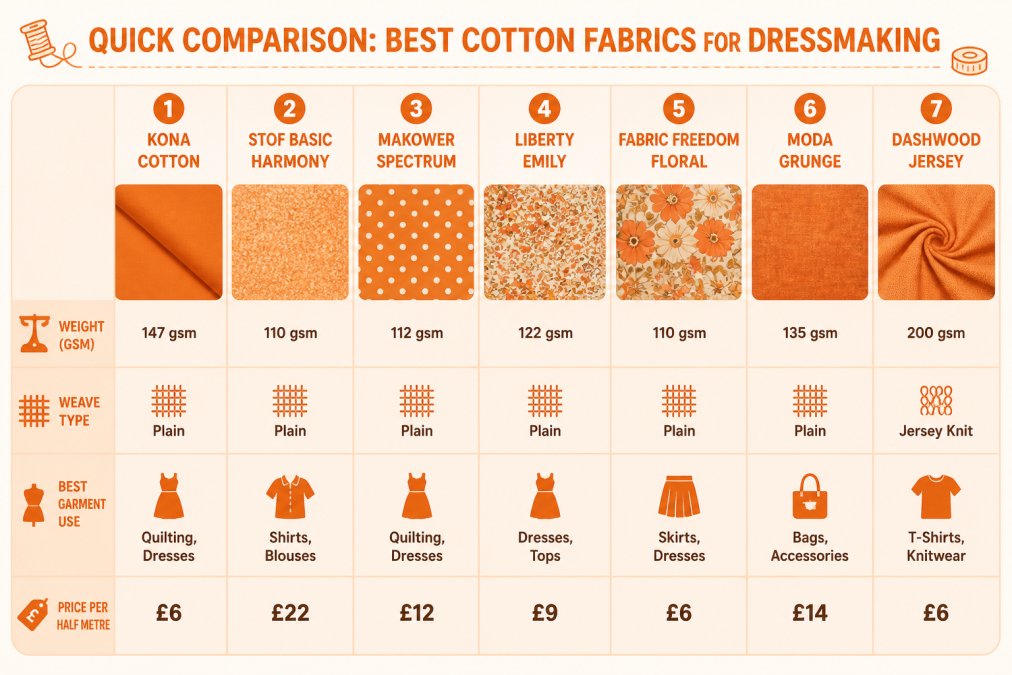
How to Choose the Right Cotton Fabric for Your Dress Project
Start with two questions: how should the finished dress hang, and how much structure does the design need? A crisp poplin shirtwaist behaves nothing like a fluid jersey wrap, even though both are cotton. Get those two answers right and the rest of the decision usually falls into place.

Weight and Drape: What Works for Which Garment
Fabric weight is the mass of the cloth per square metre, and it decides whether a dress holds a shape or flows. Light cottons under roughly 120 gsm drape softly and suit gathered skirts and summer shifts. Medium weights, around 120 to 160 gsm, hold a pleat and take a seam without puckering, which is why they dominate day dresses. Anything heavier starts to behave like a furnishing cloth and is best kept for structured, sculptural shapes.
Weave Matters: Poplin, Lawn, Sateen and Jersey
Poplin is a plain weave with fine crosswise ribs, giving a smooth, crisp hand that presses beautifully. Lawn is lighter and finer still, prized for heirloom dresses and delicate prints. Sateen is woven with floats that create a subtle sheen and a heavier drape. Jersey is a knitted cotton, so it stretches and recovers, making it the right choice for fitted dresses that need to move with you.
1. Kona Cotton Solid by Robert Kaufman: Best All-Rounder
Kona Cotton Solid is the best cotton fabric for dressmaking when you want one cloth that behaves predictably across almost any pattern. It is a medium-weight plain weave, soft to the touch and blended from Pantone dyes, with a colour range that is hard to beat. Multiple units arrive uncut as one continuous piece, so you can order exactly what the pattern demands.
Where it wins: it washes very well, which matters for a dress you intend to wear weekly rather than save for occasions. The density means it resists fraying on the cutting table, so beginners spend less time chasing loose threads.
The honest drawback is that it is not the cheapest solid on the shelf. You are paying for consistency, and the dye lots match reliably.
2. Stof Basic Harmony Pastel: Best for Soft, Subtle Prints
Stof Basic Harmony Pastel suits dressmakers who want a gentle print rather than a bold statement. This Japanese-made 100% cotton carries small patterns and muted colours, with the Jade Teal Aqua Dot Spot design being a good example of the range. It is a lovely quality cloth that works across dressmaking, patchwork and quilting.
The subtlety is the point. Large-scale florals can overwhelm a simple A-line or shift, whereas a small dot or spot print reads as texture from a distance and detail up close. Machine wash warm on a normal cycle, tumble dry medium and press with a warm iron.
One caveat: the brand notes these fabrics are not intended for children's sleepwear, so keep them for daywear and adult garments.
3. Makower UK Solid Spectrum: Best Budget Plain Cotton
Makower UK Solid Spectrum is the sensible answer when you need a dependable plain cotton without stretching the budget. It is quality cotton in a broad colour range, stocked in our North Yorkshire showroom and available with free UK delivery.

What most guides miss is how often you actually need a plain cloth. Linings, facings, contrast yokes and test garments all eat fabric, and using your best stock for a toile is a waste. Spectrum is the cloth to keep on the shelf for exactly that.
The trade-off is a slightly firmer hand out of the bag. A pre-wash softens it noticeably.
4. Liberty Fabric Emily Silhouette: Best for Special Occasion Dresses
This English Garden print is a fine, light cotton with the fluid drape that Liberty is known for, sold by the half metre with multiples cut in one continuous length. At £9.00 per half metre it is a way to use a heritage print on a real garment.
Use it for occasion dresses, delicate blouses and anything where the fabric itself is the feature. The lightness means it gathers into soft folds without bulk at the waist.
A word of warning: fine lawn frays if you leave it sitting. Finish your seams as you go, and use a fresh needle.
5. Fabric Freedom Floral Print: Best for Summer Dresses
Fabric Freedom Floral Print is a good pick for warm-weather makes, and the yellow floral is a print that can enhance a simple sundress pattern. It is 100% cotton, 110cm wide and sold by the half metre, which keeps a summer dress project genuinely inexpensive.
The width is worth noting. At 110cm you will need more length than a 140cm-wide cloth for the same pattern, so check your cutting layout before ordering.
6. Moda Grunge by BasicGrey: Best for Structured Garments
Moda Grunge by BasicGrey is the structured option, and it is more interesting than a flat solid. The cloth is double-sided: one face reads as a near-solid, the other carries brushed colour throughout, so you can use either side or combine both for contrast panels. It is 100% cotton at £14.00 per metre.
Structured dresses, pinafores and garments with defined seams all benefit from this density. It presses crisply and holds a fold, which is what you want when the design depends on sharp lines rather than flow.
7. Dashwood Jersey: Best Cotton Blend for Stretch Dresses
Dashwood Jersey is the one to choose when the dress needs to move. As a knitted cotton it stretches and recovers, which makes it right for fitted dresses, wrap styles and anything pulled on over the head. The Turquoise Diamonds print is a good example of the range, sold by the half metre at £6.00.

Sewing with jersey is a different skill from woven cotton. Use a ballpoint or stretch needle, a narrow zigzag or overlocker on the seams, and avoid stretching the fabric as it feeds. A walking foot helps enormously if you have one.
If you are coming from wovens, expect your first jersey dress to take longer than you think.
Cotton Lawn vs Poplin for Dresses: Which Should You Choose?
Cotton lawn is the better choice for lightweight, drapey summer dresses and delicate prints, while poplin suits dresses that need crisp structure and a smooth, pressed finish. Both are plain-weave cottons, so the difference is weight and hand rather than fibre.
Choose lawn when the design relies on gathering, soft folds or a fine print. Choose poplin when you want a shirtwaist, a defined collar or a dress that holds its line through a long day.
If you are unsure, buy half a metre of each and drape them over your hand. The cloth that falls the way your pattern sketch suggests is the one to order.
Preparing Your Cotton Before You Cut
Wash and press your cotton before cutting, using the same temperature you will use on the finished dress. Cotton shrinks, and a dress cut from unwashed cloth can lose a size after its first laundry cycle. Pre-washing also removes the factory finish, so the fabric takes a press more honestly.
For a fuller walkthrough, the UK Craft Council guidance on textile care and making is a useful starting point, and WRAP's textiles guidance explains why caring for garments properly keeps them out of waste. If you are buying thread to match, the UK Textile Institute's resources on fibre and thread selection covers how thread weight interacts with cloth.
On the machine side, a sharp pair of pin scissors makes trimming seams and clipping curves far quicker than wrestling with shears, and a Sew Fine sewing cabinet keeps the whole setup organised if you sew in a shared room. For heavier work, a FEIYUE industrial sewing machine handles dense seams that a domestic machine will labour over.
The real challenge with dressmaking cotton is not finding a fabric, it is finding one whose weight, weave and drape match the garment in your head. Get that wrong and even flawless sewing produces a dress that hangs oddly. Fabric Mouse stocks the full range covered here, from Kona Cotton Solid and Makower Spectrum through to Dashwood Jersey and Liberty lawn, with free delivery and 24-hour delivery on UK orders. Our team can advise on weight and yardage before you buy, and our authorised service centre keeps your sewing and embroidery machines, including Bai embroidery, Poolin Embroidery and FEIYUE models, running properly. Contact us and we will help you match the right cloth to your next dress.
Frequently Asked Questions
Which cotton fabric is best for a beginner dressmaking project?
Kona Cotton Solid by Robert Kaufman is an excellent starting point. It is medium weight, stable under the needle, and washes well, which makes it forgiving for new sewists. Makower UK Solid Spectrum at £12 per metre is another budget-friendly option with good colour range. Both hold a press nicely and do not shift as you cut, so your seams stay accurate. Start with a simple A-line skirt or shift dress pattern to build confidence before moving to trickier fabrics like lawn or jersey.
What is the difference between cotton lawn and cotton poplin for dressmaking?
Lawn is lighter and finer, usually around 70 to 100 gsm, with a smooth, almost silky hand. It drapes softly and suits summer blouses, lined dresses and delicate gathers. Poplin sits heavier at roughly 110 to 130 gsm, with a crisp, tight weave that holds structure well. Poplin works for shirts, structured bodices and A-line skirts. If you want float, choose lawn. If you want shape, choose poplin. Both are 100% cotton and press beautifully.
Does cotton fabric shrink when used for dressmaking?
Most cotton fabrics shrink between 3% and 5% on the first wash, depending on the weave and finish. Pre-wash your fabric before cutting to avoid a finished garment that no longer fits after laundering. Wash at the temperature you plan to use for the finished dress, usually 30°C or 40°C, then tumble dry on medium or line dry. Press while slightly damp. Kona Cotton and Makower Spectrum both wash particularly well and hold their size after one pre-wash cycle.
How do I choose the right weight of cotton for a dress?
Match the weight to the silhouette you want. Lightweight cotton under 100 gsm, such as lawn, suits flowing dresses with gathers or tiers. Medium weight at 110 to 150 gsm, like Kona Cotton or Stof Basic Harmony, works for most day dresses, shifts and fit-and-flare styles. Heavier cotton above 150 gsm, including sateen or Moda Grunge, gives structure for pinafores and tailored bodices. Hold the fabric up to light and drape it over your hand to judge how it falls before committing.
Is cotton sateen suitable for making dresses?
Yes, cotton sateen works well for dresses that need body and a subtle sheen. Its satin weave gives a smooth face and slightly heavier hand, typically 150 to 200 gsm, so it holds shape in pencil skirts, sheath dresses and structured bodices. It presses crisply and takes topstitching neatly. Avoid sateen for loose, floaty styles because it will not drape softly. Pre-wash it first, as the weave can shrink slightly more than plain cotton.
Sewing Machine Repair Near Me: Local Service & Care Tips
Why Buy a Sewing Machine From a Local Shop: 2026 Guide
Related Posts

Lord of the Rings Fabric: A Guide for Quilters

How to Thread a Sewing Machine Correctly

Is a Heavy Duty Sewing Machine Worth It?

Best Fabric Shops in North Yorkshire: 2026 Guide

5 Best Portable Sewing Machines for Classes

Best Fabric Drape for Summer Dresses

Why Your Sewing Machine Smells Like Burning
