

Best Fabric for Quilting Projects 2026
Table of Contents
- What Makes the Best Fabric for Quilting Projects
- High-Quality Quilting Cotton Brands Worth Using
- How to Choose Fabric for Patchwork Success
- Best Thread for Quilting Projects
- Batting and Wadding: The Hidden Layer
- Fabric Preparation Before You Start
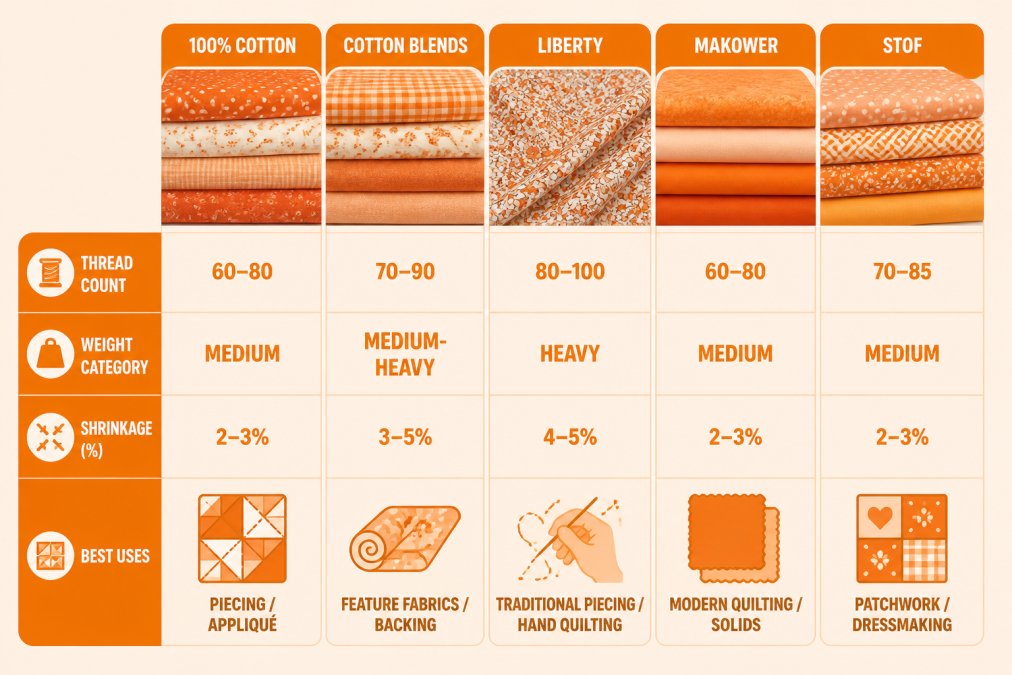
- Comparison Table: Quilting Fabric Types and Uses
- Common Mistakes When Selecting Quilting Fabric
- Where to Buy Quality Quilting Fabric
- Frequently Asked Questions
Last Updated: September 18, 2026
What Makes the Best Fabric for Quilting Projects
The best fabric for quilting projects in 2026 isn't always the most expensive or the most famous brand. It's the one that performs consistently across your specific project needs. When selecting fabrics for quilting, you're making three critical decisions: fibre content, thread count, and how the fabric will behave under needle and foot.
Most quilters make the mistake of choosing based on colour or pattern alone. That approach leaves you with beautiful fabric that frays unpredictably, shrinks after washing, or loses its shape during piecing. The right selection requires understanding what happens to fabric when it's cut, sewn, and quilted.
The difference between a quilt that holds its shape for decades and one that deteriorates within years comes down to three things: the fibres themselves, how tightly they're woven, and how well you've prepared them before cutting. Below, we'll show you exactly how to evaluate each factor and build a fabric collection that delivers results.
Fibre Content and Weight
The fibre content of your fabric determines how it behaves under stress. Pure 100% cotton remains the gold standard for quilting because it's stable, presses cleanly, and holds its shape through repeated washing. Cotton fibres grip each other tightly when woven, which means less fraying at seams and more predictable piecing.
Cotton blends introduce variables. A 65% cotton, 35% polyester blend might feel softer initially, but polyester doesn't absorb moisture the same way cotton does. This creates tension differences during quilting. When you're machine quilting through multiple layers, uneven tension means uneven stitch quality. Cotton blends also tend to show wear patterns differently; the polyester holds colour longer while the cotton fades, creating a mottled appearance over time.
Weight matters equally. Lightweight quilting cotton (around 120 gsm) is ideal for piecing because it feeds smoothly through your machine and reduces bulk at seams. Medium-weight fabrics (140-160 gsm) work better for appliqué and feature fabrics where you want the design to stand out without adding unnecessary thickness to your quilt sandwich. Heavyweight fabrics (180+ gsm) are better reserved for backing and binding, not piecing.
Thread Count and Weave Density
Thread count refers to the number of threads per square centimetre. Higher thread count doesn't always mean better quilting fabric; in fact, the sweet spot for quilting cotton is 60-80 threads per centimetre. This density gives you enough structure to hold piecing seams without being so tight that the fabric becomes difficult to needle.
Weave density is slightly different from thread count. A tight weave means the threads are packed closely together, reducing fraying and improving stability. A loose weave allows more movement, which can lead to distortion during piecing. Run your finger across the fabric grain; if you feel individual threads moving, the weave is too loose for precision quilting.
The relationship between thread count and weave density explains why some premium fabrics feel different from budget options. A fabric with 70 threads per centimetre in a tight weave will perform better than a fabric with 90 threads per centimetre in a loose weave. When you're shopping, ask about weave density rather than relying solely on thread count.
High-Quality Quilting Cotton Brands Worth Using
Choosing the right brand matters because manufacturers have different standards for shrinkage, dye stability, and consistency. Some brands guarantee minimal shrinkage after pre-washing; others accept higher shrinkage as normal. Some use dyes that bleed into adjacent fabrics; others don't. These aren't minor differences; they affect your finished quilt.
Moda Fabrics for Versatile Projects
Moda fabrics have become a standard in quilting studios because they deliver consistent quality across their entire range. Their 100% cotton construction and reliable thread count make them predictable to work with, whether you're piecing a simple nine-patch or a complex appliqué design.
The Moda Fabrics quality standards ensure that shrinkage stays below 3% after washing, which means your finished quilt dimensions remain stable. This matters when you're making a quilt intended to fit a specific bed or wall space. Their dyes are set properly, so colour bleeding is minimal even with dark fabrics.
Moda offers collections designed to work together, which simplifies colour coordination. The Grunge collection, for example, includes coordinating solids and textures that naturally complement each other. You can mix prints and solids without worrying whether the colours will clash. The Moda Grunge Fabric 30150 293 Periwinkle 1m at £14.00 per metre is a textured fabric that works beautifully in both traditional and modern quilts. The subtle texture adds depth without overwhelming piecing patterns.

For projects requiring more visual interest, the Just Another Walk In The Woods by Stacy Iest Hsu #20520 | Moda offers multicolour designs that work as feature fabrics or background prints. This panel measures 92cm by 110cm wide, giving you a complete image without piecing, which is ideal when you want a focal point in your quilt.
Liberty Fabrics for Traditional Quilting
Liberty fabrics bring a different aesthetic to quilting. Their signature small-scale floral prints and precise colour work make them ideal for traditional English quilting designs.
The Liberty Fabric Emily Silhoutte Green - 1/2 metre at £9.00 per half metre showcases the intricate floral designs Liberty is known for. At 110cm wide, this fabric works equally well for piecing or as a backing fabric. The precision of the print means every piece you cut shows a complete design element, which elevates the visual impact of your finished quilt.

Makower and Stof for Everyday Quality
Makower fabrics' 100% cotton construction is reliable, and their collections are designed to coordinate well together.
The Olive Linen Texture Cotton Fabric | Makower - 1/2 metre at £7.00 per half metre provides a textured solid that works as a neutral or accent fabric. The linen-like texture adds visual interest without pattern complexity, making it ideal for showcasing your quilting stitches.
Stof fabrics, made in Japan, are known for subtle colour work. The Stof Basic Harmony Pastel at £32.00 features soft pastel tones with small-scale patterns, making it suitable for both patchwork and quilting projects. The collection is designed to work together, simplifying colour coordination for larger projects.
How to Choose Fabric for Patchwork Success
Selecting fabric for patchwork requires thinking beyond the individual piece. You're choosing how those pieces will interact with each other across your entire quilt. The best fabric for quilting projects in 2026 considers scale, contrast, and how colours will read from a distance.
Colour Coordination and Pattern Matching
Start with a focal fabric, the print or colour that excites you most. Everything else should either complement or contrast with this choice. If your focal fabric features large-scale prints, pair it with medium or small-scale prints to create visual rhythm. If it's a solid or small-scale print, you have more flexibility with larger prints.
Contrast matters more than most quilters realise. A quilt made entirely of similar-value fabrics (all light or all medium tones) reads as flat, even if the colours are different. Include at least one fabric that's significantly darker or lighter than the others. This creates visual depth and makes your piecing pattern visible from a distance.
Test your colour choices by photographing them together under natural light. Phone cameras reveal colour relationships differently than your eyes do, and this test helps you spot problems before cutting. If the colours look muddy or clash in the photo, they'll likely cause issues in your finished quilt.
Pre-Cut Options: Charm Packs and Jelly Rolls
Pre-cut fabric bundles eliminate the guesswork of colour coordination because manufacturers have already selected fabrics that work together. A charm pack contains 5-inch squares; a jelly roll contains 2.5-inch strips.
The To be Jolly Charm pack by one canoe two square quilting fabric 5" CP11 at £13.50 includes 42 5 x 5 inch 100% cotton squares. This is enough for a small wall quilt or the centre of a larger project. The pre-selected colours take the decision-making out of fabric selection, which is ideal when you're learning or want to complete a project quickly.
The Corner of 5th & Fun by Sandy Gervais | Moda Jelly Roll at £33.99 includes 40 pre-cut 2.5-inch strips, each 44 inches long. Jelly rolls work beautifully for strip-piecing projects, log cabin designs, and binding. The coordinated colours mean your finished quilt will have cohesion even if you're not confident mixing fabrics yourself.
Best Thread for Quilting Projects
Thread choice affects both the appearance and longevity of your quilt. The best thread for quilting projects should match your fabric weight and quilting method.
Match your thread colour to your fabric or choose a neutral shade that blends across multiple fabrics. Matching thread makes quilting stitches less visible; contrasting thread makes them a design feature. Both approaches work; choose based on your design intent.
Batting and Wadding: The Hidden Layer
Batting (called wadding in British terminology) is the insulation layer between your quilt top and backing. It's often overlooked, but it's as important as your fabric choices. The best fabric for quilting projects means nothing if your batting choice doesn't support it properly.
Cotton batting is traditional and breathes well. The Organic Cotton Wadding & Batting 90" or Extra Wide 120" Wadding at £16.99 per metre is made with natural fibres and provides excellent insulation. At roughly 2mm thick, it's suitable for machine quilting.

Fabric Preparation Before You Start
Pre-washing fabric is the single most important step before piecing, yet many quilters skip it. Unwashed fabric can shrink, bleed colour, and lose shape during quilting and washing. Pre-washing takes time, but it prevents disasters later.
Wash fabric in warm water with a mild detergent. Dry on a low heat setting or air dry. Press with a warm iron before measuring and cutting.
Comparison Table: Quilting Fabric Types and Uses
| Fabric Type | Thread Count | Weight | Best Uses | Shrinkage | Cost per Metre |
|---|---|---|---|---|---|
| 100% Cotton (standard) | 60-80 | Medium (140-160 gsm) | Piecing, appliqué | 2-3% | £8-14 |
| Cotton Blends | 70-90 | Medium-heavy | Feature fabrics, backing | 3-5% | £6-10 |
| Liberty Cotton | 80-100 | Heavy (180+ gsm) | Traditional piecing, hand quilting | 4-5% | £9+ |
| Makower Cotton | 60-80 | Medium | Modern quilting, solids | 2-3% | £7-8 |
| Stof Cotton | 70-85 | Medium | Patchwork, dressmaking | 2-3% | £32+ per collection |
Common Mistakes When Selecting Quilting Fabric
The most common mistake is choosing fabric based solely on colour without considering how it will interact with other fabrics in your quilt. A beautiful fabric in isolation can clash with everything around it. Always audition fabrics together before cutting.
Another frequent error is mixing fabric weights without accounting for bulk at seams. If you piece a lightweight fabric to a heavyweight fabric, the seam allowance will be uneven, creating puckering during quilting. Stay consistent with fabric weight, or use different weights intentionally in different sections of your quilt.
Many quilters underestimate shrinkage. Buying exactly the yardage you need, without accounting for shrinkage, means you'll end up short. Calculate yardage based on your finished quilt size, then add 10% to account for shrinkage and testing.
Neglecting to pre-wash is a costly mistake. Discovering after quilting that your fabric bleeds colour or shrinks unevenly means starting over. The time investment in pre-washing is minimal compared to the risk of ruining your project.
Where to Buy Quality Quilting Fabric
Quality matters when buying quilting fabric because poor-quality fabric wastes your time and materials. Fabric Mouse stocks a curated selection of premium quilting cottons, pre-cut bundles, and batting options designed for quilters at every level.
Shopping in person at Fabric Mouse's showroom in North Yorkshire allows you to feel the fabric, assess weight and weave density by hand, and see colour coordination in natural light. Free shipping and 24-hour delivery mean you can also shop online with confidence that your order arrives in excellent condition.
When shopping online for quilting fabric anywhere, check the fibre content and thread count in the product description.
Avoid purchasing fabric based on photos alone unless you've used that brand or collection before. Lighting, screen settings, and dye variations mean online images don't always represent actual colour accurately.
Frequently Asked Questions
What is the best thread count for quilting cotton?
Quilting cotton typically ranges from 60 to 120 threads per centimetre. Most quilters prefer 80-120 thread count for piecing work, as this density provides enough strength to hold seams during the quilting process without being too dense to needle easily. Higher thread counts create a tighter weave that resists fraying and holds intricate designs better. Lower counts offer more flexibility for hand-quilting. Check your fabric's thread count before purchasing to ensure it matches your project's demands.
How do I identify high-quality quilting fabric?
High-quality quilting cotton has consistent colour, tight weave, and no visible flaws or thin spots. Examine the fabric against light to check for uniformity. Premium fabrics from established manufacturers like Moda, Liberty, and Makower maintain colour accuracy and resist pilling after washing. Feel the fabric; quality quilting cotton has a smooth, slightly stiff hand rather than a limp drape. Check the selvedge edge for the manufacturer's name and collection details, which indicate authentic, tested fabrics designed specifically for quilting projects.
Should I pre-wash my quilting fabric before starting a project?
Pre-washing can reduce future shrinkage and colour loss, but it may also soften the fabric's finish, making piecing slightly more difficult.
What are the benefits of using premium cotton for patchwork?
Premium cotton fabrics for patchwork offer superior durability, colour fastness, and consistency in weave and weight. They hold seams better during piecing and quilting, resist fraying at cut edges, and maintain their appearance through many wash cycles. Premium fabrics like those from Moda and Liberty are engineered for precision cutting and accurate piecing, meaning your blocks align better and your finished quilt looks more professional. The investment in quality fabric pays dividends in finished quilt longevity and visual impact, especially for heirloom-quality projects.
Are there specific fabric trends for quilting in 2026?
Contemporary quilting trends favour both traditional patterns and modern minimalist designs. Subtle, tonal prints and small-scale geometric patterns remain popular, alongside collections featuring nature-inspired themes and heritage designs. Grunge-textured fabrics continue to appeal to quilters seeking depth and visual interest. Pre-cut bundles like charm packs and jelly rolls remain in demand for their convenience and coordinated colour schemes. Japanese-made cottons with delicate patterns and solid basics are increasingly popular for modern quilting approaches.
What weight of fabric is best for quilting projects?
Quilting-weight cotton, typically between 150-180 grams per square metre, is the standard choice for most piecing projects. This weight provides enough body to hold seams and resist stretching during piecing and quilting, whilst remaining easy to needle by hand or machine. Lighter fabrics may stretch or distort, whilst heavier fabrics become difficult to piece accurately. Always check fabric specifications before purchasing to confirm it's designated as quilting-weight rather than dress-weight or home-décor weight, which behave differently under stress.
Can I use different fabric types in the same quilt?
Mixing fabric types in one quilt is possible but requires care. Combining quilting-weight cotton with lighter dress fabrics or heavier home-décor fabrics can cause uneven seams, distortion, and inconsistent finished appearance. If you want variety, stick within the quilting-weight category and choose fabrics with similar thread counts and weave densities. Pre-cut bundles from coordinated collections (like charm packs and jelly rolls) are designed to work together, making them safer choices for mixed-fabric projects than random combinations.
Selecting the best fabric for quilting projects in 2026 comes down to understanding fibre content, thread count, and how fabrics interact with each other. The right choices create quilts that look beautiful, hold their shape, and last for decades. Fabric Mouse can guide you through every step, from selecting your first quilting cottons to finding the perfect batting for your project. Get started with Fabric Mouse and build a fabric collection that delivers results every time.
Why Choose Expert Sewing Machine Support in 2026
Best Sewing Machine for Dressmaking: 2026 Guide
Related Posts

Lord of the Rings Fabric: A Guide for Quilters

How to Thread a Sewing Machine Correctly

Is a Heavy Duty Sewing Machine Worth It?

Best Fabric Shops in North Yorkshire: 2026 Guide

5 Best Portable Sewing Machines for Classes

Best Fabric Drape for Summer Dresses

Why Your Sewing Machine Smells Like Burning
