

Why Your Sewing Machine Smells Like Burning
Table of Contents
- Why Your Sewing Machine Smells Like Burning
- Common Causes of Burning Smells in Sewing Machines
- How to Clean Sewing Machine Lint to Stop Burning Smells
- Sewing Machine Motor Overheating: Symptoms and Solutions
- Troubleshooting Steps to Take Right Now
- When to Stop Using Your Machine and Seek Professional Help
- Professional Sewing Machine Repair Services
- Common Mistakes to Avoid
- Frequently Asked Questions
Last Updated: October 1, 2026
Why Your Sewing Machine Smells Like Burning
A sewing machine burning smell is your machine's way of signalling that something needs attention. This isn't a smell you should ignore, it's a warning sign that demands action before you damage your equipment further.

The burning odour typically comes from friction, overheating, or debris. Understanding what causes it and how to fix it will save you time, money, and frustration. At Fabric Mouse, we've helped many sewers troubleshoot this exact problem, and most of the time, the fix is straightforward.
In this guide, we'll walk you through the common causes, how to clean your machine properly, and when it's time to stop sewing and call a professional. Let's start by identifying what's actually burning.
Common Causes of Burning Smells in Sewing Machines
The burning smell doesn't mean your machine is broken. It means something inside is generating heat or friction it shouldn't be.
Friction from lint and dust buildup
Lint is the silent killer of sewing machines. Every time you sew, tiny fibres from your fabric come loose and get pulled into the mechanism. They settle around the needle, feed dogs, and motor.
When lint builds up, it creates friction. Friction creates heat. Heat creates that distinctive burning smell.
This is the most common cause, and it's also the easiest to fix. Regular cleaning prevents this problem entirely. If you sew frequently, say, more than a few hours per week, you should clean your machine every 4-6 weeks.
The smell usually appears after you've been sewing continuously for 30-60 minutes. Your machine gets warm, the lint gets compressed, and the odour becomes noticeable.
Needle and thread problems
A bent or dull needle creates friction as it pushes through fabric. Instead of sliding smoothly, it catches and rubs against the needle plate. This friction generates heat and that burning smell.
The same thing happens if your thread is the wrong weight for your needle. Too-thick thread forced through a thin needle creates resistance. The needle heats up. The smell follows.
Check your needle first. A needle costs pence and takes 30 seconds to replace. A damaged needle is one of the quickest fixes available.
Motor strain and overuse
Your sewing machine motor isn't designed to run continuously for hours without a break. If you sew for 2-3 hours straight without stopping, the motor can overheat.
An overheating motor smells like burning plastic or rubber. It's different from the lint-friction smell, which is sharper and more acrid.
Motors also strain when you're sewing through thick fabric, denim, canvas, or multiple layers. The motor works harder, generates more heat, and can trigger that burning smell even after just 30-45 minutes of heavy sewing.
How to Clean Sewing Machine Lint to Stop Burning Smells
Cleaning is prevention. A clean machine won't smell like burning, and it will perform better overall.
What you'll need before cleaning
Gather these items before you start:
- Small soft brush (a paintbrush works well, or use the brush that came with your machine)
- Tweezers for stubborn lint
- Lint roller or old toothbrush
- Small container of sewing machine oil (if your manual recommends it)
- Compressed air canister (optional but helpful)
- Your machine's instruction manual
Don't use a vacuum cleaner. The suction can damage delicate internal parts. Stick to manual cleaning methods.
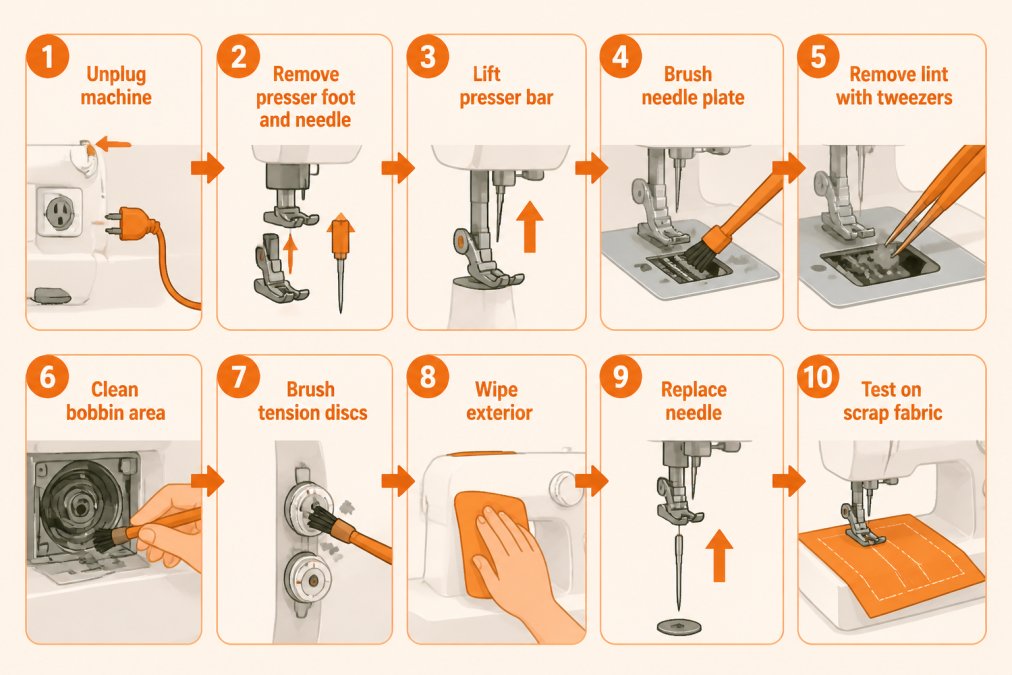
Step-by-step cleaning process
Step 1: Unplug your machine. Safety first. Never clean a plugged-in machine.
Step 2: Remove the presser foot and needle. This gives you clear access to the needle plate and feed dogs.
Step 3: Lift the presser bar. This opens the tension discs, allowing lint to escape more easily.
Step 4: Brush the needle plate area. Use your soft brush to sweep lint away from the needle plate, feed dogs, and surrounding areas. Get into the corners where lint loves to hide.
Step 5: Use tweezers for stubborn bits. If lint is packed tightly, tweezers will pull it out without damaging anything.
Step 6: Clean the bobbin area. Remove the bobbin case and brush around it. Lint accumulates here too.
Step 7: Brush the thread guides and tension discs. These narrow spaces trap lint. A thin brush works best here.
Step 8: Wipe down the exterior. Use a damp cloth to remove dust from the outside of your machine.
Step 9: Replace the needle and presser foot. Insert a fresh needle while you're at it.
Step 10: Test on scrap fabric. Sew a few stitches on scrap fabric before starting your actual project.
This entire process takes 15-20 minutes. Do it every 4-6 weeks if you sew regularly.
Sewing Machine Motor Overheating: Symptoms and Solutions
Motor overheating is different from lint friction. The smell is stronger, more chemical, and often accompanied by other warning signs.
How to identify motor overheating
An overheating motor produces a sharp, acrid burning smell, almost like burning plastic or rubber. It's noticeably different from the lint-friction smell, which is more organic and less intense.
Other signs of motor strain include:
- Stitches becoming uneven or skipped
- The machine slowing down mid-project
- The motor sounding strained or laboured
- The machine feeling hot to the touch (especially around the motor area)
- A burning smell that doesn't disappear after cleaning
If you notice any of these, stop sewing immediately. Let your machine cool for at least 30 minutes before using it again.
Preventing motor damage
Give your machine breaks. Sew for 45-60 minutes, then let it rest for 15-20 minutes. This simple habit prevents motor overheating.
Avoid sewing through thick materials continuously. Alternate between thick and thin fabrics. If you're quilting through multiple layers, take frequent pauses.
Machine Servicing & Repairs | Sewing Machine Service →
Check that your machine has proper ventilation. Don't cover it with a cloth while it's running. Don't sew in a hot room without air circulation. Motors need to breathe.
If your machine is old or has been heavily used, the motor may be wearing out. This is when professional servicing becomes essential.
Troubleshooting Steps to Take Right Now
You've identified a burning smell. Here's what to do immediately.
Check the needle first. Remove it and look for bends, dull spots, or damage. Replace it with a fresh needle designed for your fabric type. This solves the problem in about 50% of cases.
Clean the lint. Follow the cleaning steps above. Pay special attention to the needle plate, feed dogs, and bobbin area. This solves another 30-40% of cases.
Check your thread. Make sure it matches your needle size. Heavy thread needs a larger needle. Thin thread needs a smaller needle. Mismatches create friction.
Let your machine cool. If you've been sewing continuously, unplug the machine and let it rest for 30 minutes. Don't use it again until it's completely cool.
Test on scrap fabric. After cleaning or replacing the needle, sew on scrap fabric for a minute. The smell should be gone or significantly reduced.
If the smell persists after these steps, or if it's coming from the motor area, stop using the machine. Professional service is your next step.
When to Stop Using Your Machine and Seek Professional Help
Not every burning smell requires professional repair. But some do.
Stop using your machine if:
- The burning smell comes from the motor area and doesn't disappear after cleaning
- The smell is accompanied by strange sounds, grinding, squealing, or clicking
- Stitches remain uneven or skipped even after replacing the needle
- The machine feels hot to the touch and doesn't cool down after 30 minutes of rest
- You smell burning plastic or rubber (not the lint-friction smell)
- Smoke is visible coming from the machine
These are signs of internal damage. Continuing to sew will only make it worse.
A professional engineer can diagnose the exact problem. Sometimes it's a simple fix, a worn belt, a misaligned part, or motor brushes that need replacing. Sometimes it's more serious. Either way, you'll know what you're dealing with.
Professional Sewing Machine Repair Services
When your machine needs professional attention, you need a service centre you can trust.
Fabric Mouse has been servicing sewing machines since 1922. We're an authorised service centre for all brands of machine, and we handle everything from simple cleanings to complex motor repairs.
Our service includes a full inspection of your machine. We'll identify what caused the burning smell and fix it properly. Most machines are ready for collection within 2-3 weeks.
The service costs £70.00 and includes a complete inspection. We'll contact you when your machine is ready.
Bring your machine during our showroom hours: 10am to 3:30pm, Monday to Friday. We're located in North Yorkshire and offer on-site parking and a café while you wait.
If you'd prefer to post your machine, we accept postal deliveries. Just make sure it's securely packaged in its original box, we can't guarantee coverage if it arrives damaged due to poor packaging.
Sewing Machine Service at Fabric Mouse
Common Mistakes to Avoid
Learning what NOT to do is just as important as knowing what to do.
Don't use a vacuum cleaner to remove lint. The suction damages delicate internal parts. Stick to a soft brush and tweezers.
Don't ignore the burning smell. It's a warning. Address it quickly before it becomes a bigger problem.
Don't sew continuously for hours without breaks. Your motor needs rest. Take a 15-20 minute break every 45-60 minutes.
Don't force thick fabric through your machine. If you're struggling, you're creating friction and heat. Slow down, use the right needle, and take breaks.
Don't oil your machine unless your manual says to. Over-oiling creates more problems than it solves. Modern machines often don't need oil at all.
Don't replace the needle with just any needle. Match the needle to your fabric type and weight. A universal needle works for most fabrics, but specialist needles exist for a reason.
Don't wait for a professional repair if the smell is strong or accompanied by other warning signs. Every day you delay increases the risk of permanent damage.
A burning smell is your machine telling you something's wrong. Most of the time, it's a simple fix, lint, a dull needle, or motor fatigue. Clean your machine regularly, replace needles when needed, and give your motor breaks during long sewing sessions. These habits prevent the burning smell from happening in the first place.
If the smell persists after cleaning and a needle change, or if it's coming from the motor, professional service is your best option. At Fabric Mouse, we've been servicing machines for over a century. Our engineers can diagnose and fix any burning-smell issue, getting your machine back to perfect working order within 2-3 weeks. Book your sewing machine service at Fabric Mouse and sew with confidence again.
Frequently Asked Questions
Is it safe to keep using a sewing machine that smells like burning?
No, you should stop using your machine immediately if it produces a burning smell. Continuing to sew risks permanent damage to the motor and internal components. A burning smell indicates friction, overheating, or electrical strain. Stop, unplug the machine, and identify the cause before resuming. If the smell persists after cleaning lint and checking the needle, contact a professional repair service straightaway.
How do I clean a sewing machine to prevent burning smells?
Regular cleaning prevents lint buildup, the most common cause of burning smells. Unplug your machine and use a small brush to remove lint from the bobbin area, feed dogs, and needle plate after every project. Clean the presser foot and check that thread isn't wound around the motor shaft. Perform a deep clean monthly if you sew regularly. This maintenance reduces friction and keeps your machine running safely.
Can a sewing machine motor burn out completely?
Yes, a motor can burn out if overheated or strained repeatedly. Overheating happens when lint blocks airflow, the motor works too hard on thick fabrics without breaks, or internal components fail. A burnt-out motor requires professional replacement and is expensive to repair. Prevent this by cleaning regularly, taking breaks during long sewing sessions, and using the correct needle and thread for your fabric. If your machine smells like burning, stop immediately to avoid motor damage.
What should I do if my sewing machine starts smoking?
Stop sewing immediately and unplug the machine. Do not attempt to use it again until you've identified the problem. Smoking indicates serious overheating or electrical failure. Let the machine cool for at least 30 minutes before investigating. Check for visible damage, melted plastic, or debris around the motor. If you cannot identify a simple cause like trapped fabric, contact a professional repair service. Smoking machines pose a fire risk and should not be used without professional assessment.
How to Choose Your First Brother Sewing Machine
Best Fabric Drape for Summer Dresses
Related Posts

How to Sew Mitered Corners on Hems

Standard Sewing Machine for Free-Motion Quilting: Pros and Cons

How to Use Quilting Rulers for Beginners

Types of Premium Cotton for Quilting

Why Bobbin Thread Bunches Up: Fix It Now

How to Grade Sewing Patterns for Custom Fit

How to Fix Gaping Armholes in Dresses: 7 Methods
