

Best Fabric Drape for Summer Dresses
Table of Contents
- What Makes Fabric Drape Well for Summer Dresses
- Rayon: The Premium Choice for Elegant Summer Drape
- Jersey Fabrics: Comfort and Easy Movement
- Breathable Dress Fabrics for Hot Weather
- How to Test Fabric Drape Before Sewing
- Sewing Tips for Slippery Summer Fabrics
- Fabric Weight and Drape: Understanding the Connection
- Choosing the Right Fabric for Your Summer Dress Style
- Conclusion
- Frequently Asked Questions
Last Updated: October 2, 2026
What Makes Fabric Drape Well for Summer Dresses
The best fabric drape for summer dresses depends on weight, fibre content, and how the material moves when you sew and wear it. Drape refers to how fabric falls and folds when hanging freely, some fabrics cling to the body, others flow loosely, and the best choice depends on the dress style you're making.
Lightweight fabrics with natural fluidity work best for summer because they move easily in warm weather and won't cling uncomfortably to skin. Rayon, jersey, and breathable cotton blends are popular choices among dressmakers because they combine comfort with elegant movement. The key is understanding how weight affects drape: lighter fabrics flow more, whilst heavier ones hold their shape.
Below, we'll walk you through the fabrics that drape best for summer, how to test drape before cutting, and practical tips for sewing with slippery materials.
Rayon: The Premium Choice for Elegant Summer Drape
Rayon creates some of the most elegant drape in summer dressmaking. This semi-synthetic fibre has a fluid, luxurious movement that mimics natural silk but costs far less. When you sew rayon into a dress, it falls softly against the body without clinging, making it ideal for maxi dresses, wrap dresses, and any style that benefits from graceful movement.
The beauty of rayon lies in its weight-to-flow ratio. Medium-weight rayon hangs beautifully without being too heavy for summer wear, and it breathes well in warm weather. One thing to watch: rayon is slippery during cutting and sewing, so you'll need sharp scissors and patience when pinning pattern pieces.
British textile standards for natural and regenerated fibres
The Navy tangle Rayon Fabric 60" wide by 1m from Susan Driscoll for Dashwood Studio at Fabric Mouse is an excellent choice for summer projects. At £12.99 per metre, this rayon works beautifully for slip dresses, shirt dresses, or any pattern where you want fabric to move gracefully.

Jersey Fabrics: Comfort and Easy Movement
Jersey is a knit fabric that stretches slightly and recovers quickly, making it forgiving for both sewers and wearers. Unlike woven fabrics, jersey has built-in give, so fitted summer dresses don't feel restrictive. This makes it perfect for casual sundresses, t-shirt dresses, and any style where comfort matters as much as appearance.
The drape of jersey is different from woven fabrics, it clings slightly to the body rather than flowing away from it. For some dress styles, this is exactly what you want. For others, it's a limitation. Jersey works brilliantly for fitted A-line dresses or body-skimming styles, but if you want a completely loose, flowing silhouette, woven fabrics will serve you better.
Jersey fabrics from Fabric Mouse include the Stof Jersey Solids 160cm wide at £5.00 per metre, available in black. For something softer, the Stof Avalana Jersey Sweat Fabric 150cm at £6.00 per metre offers a brushed cotton jersey with a luxurious feel against skin.


Jersey requires a different sewing approach than woven fabrics. Use a stretch needle (size 75/11 or 90/14) and a ballpoint needle to prevent skipped stitches. Stretch your fabric slightly as you sew to prevent seams from breaking when the wearer moves.
Breathable Dress Fabrics for Hot Weather
Breathability matters as much as drape when choosing summer dress fabrics. Cotton, linen, and cotton-blend fabrics allow air circulation, keeping you cool even on the hottest days. These natural fibres absorb moisture, so they feel fresh against skin rather than clinging when you perspire.
Linen offers excellent breathability but has limited drape, it tends to hold its shape rather than flow. Cotton-linen blends offer a compromise: better breathability than pure cotton with slightly more drape than pure linen. For the most elegant drape combined with breathability, cotton voile or cotton lawn are ideal choices.
Textile fibre properties and breathability standards
When selecting breathable fabrics, check the thread count and weight. Lightweight fabrics (under 150 gsm) breathe better than heavier ones. A simple breathability test: hold the fabric up to light. If light passes through easily, air will too.
How to Test Fabric Drape Before Sewing
Testing drape before you buy or cut prevents disappointment later. The simplest test is the hang test: hold a swatch of fabric vertically and observe how it falls. Does it cling to your hand, flow loosely, or hold its shape? This tells you exactly how it will behave in a finished dress.
For a more thorough test, fold a larger swatch (at least 30cm square) in half lengthwise and hang it from a hanger or clothesline. Let it hang for several hours or overnight. Observe how the folds form, whether the fabric clings or flows, and whether it wrinkles easily. This mimics how the finished dress will behave when you wear it.
Navy tangle Rayon Fabric 60” wide by 1m, Susan Driscoll for Dashwood Studio →
Sewing Tips for Slippery Summer Fabrics
Rayon, silk, and some jersey fabrics are notoriously slippery, making them challenging to sew. The key is controlling the fabric as it moves through the machine. Use a walking foot if your machine has one, it feeds both layers of fabric evenly, preventing shifting and puckering.
For slippery fabrics, tissue paper stabiliser is your friend. Place a layer of lightweight tissue paper under the fabric as you sew, then tear it away afterwards. This prevents the fabric from bunching or shifting without adding bulk to the seam. Some sewers use water-soluble stabiliser instead, which dissolves when you wash the finished dress.
When pinning slippery fabrics, use fine pins and place them parallel to the seam line rather than perpendicular. This reduces the chance of the fabric shifting as you remove pins. Better still, use pattern weights or clips designed for fabric, which hold the pattern in place without leaving holes.
Machine sewing best practices and fabric handling guides
Choose thread that matches your fabric weight. Lightweight thread (50-weight) works better with delicate summer fabrics than heavy-duty thread, which can pucker lightweight materials. Polyester thread has slightly more give than cotton thread, making it a better choice for stretchy jersey fabrics.
Fabric Weight and Drape: Understanding the Connection
Fabric weight directly determines how fabric drapes. Lightweight fabrics (under 150 grams per square metre) flow and fold easily, creating soft, graceful silhouettes. Medium-weight fabrics (150-250 gsm) hold their shape better whilst still moving elegantly. Heavyweight fabrics (over 250 gsm) are too stiff for most summer dresses, they stand away from the body rather than draping.
For summer dressmaking, aim for lightweight to medium-weight fabrics. These weights balance comfort, breathability, and elegant movement. A lightweight rayon at 100-120 gsm will drape beautifully. A medium-weight cotton at 180 gsm will hold structure whilst still moving gracefully.
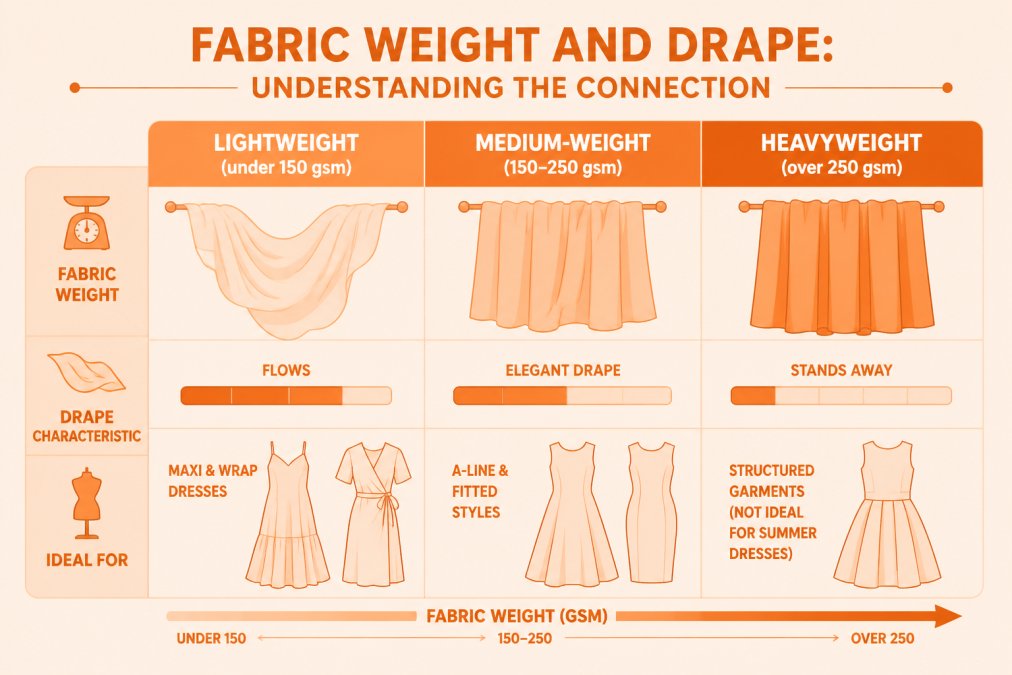
Understanding this relationship helps you choose the right fabric for your dress style. If your pattern calls for a fabric with good drape, you now know to look for lightweight to medium-weight options. If you're adapting a pattern designed for structured fabric to a summer-weight fabric, expect the silhouette to change, it will be more fitted and flowing rather than structured.
Choosing the Right Fabric for Your Summer Dress Style
Different dress styles demand different drape characteristics. A flowing maxi dress needs fabric that falls gracefully, lightweight rayon or cotton voile excels here. A fitted sundress needs fabric with some body but not too much stiffness, medium-weight cotton or a cotton blend works well. A casual t-shirt dress made from jersey needs stretch and recovery, jersey is the obvious choice.
Consider the neckline and sleeves too. A wide, drapy neckline needs fabric that flows; a fitted neckline works with almost any weight. Flutter sleeves need lightweight, flowy fabric; structured sleeves can handle medium-weight materials.
| Dress Style | Best Fabric Types | Weight Range | Why It Works |
|---|---|---|---|
| Maxi dress | Rayon, cotton voile, linen | Lightweight (100-150 gsm) | Flows gracefully without clinging |
| Fitted sundress | Cotton, cotton-linen blend | Medium (150-200 gsm) | Holds shape whilst draping elegantly |
| A-line dress | Jersey, cotton lawn | Medium (140-180 gsm) | Moves with the body without clinging |
| Wrap dress | Rayon, silk-like synthetics | Lightweight (120-160 gsm) | Drapes beautifully around curves |
| Casual t-shirt dress | Jersey, cotton knit | Stretchy (any weight) | Comfortable and forgiving |
When you're ready to sew, Fabric Mouse stocks high-quality options across these categories. Whether you choose rayon for elegance or jersey for comfort, starting with the right fabric can contribute to a more enjoyable sewing process.
Conclusion
The best fabric drape for summer dresses combines lightweight weight, natural breathability, and fluid movement. Rayon delivers luxury drape at an affordable price, jersey offers comfort and stretch, and breathable cotton blends provide everyday practicality. Test your fabric's drape before cutting, use appropriate sewing techniques for slippery materials, and match your fabric choice to your dress style for the best results.
At Fabric Mouse, we understand that choosing the right fabric is important for a sewing project. Our curated selection of premium summer fabrics, from elegant rayon to comfortable jersey, aims to provide materials you can trust. Browse our dressmaking fabrics, test samples if you're unsure, and contact our team if you need guidance on which fabric suits your vision. With the right material and a little sewing knowledge, you can create summer dresses that look professional and feel wonderful to wear.
Frequently Asked Questions
Which fabrics offer the best drape for summer dresses?
Rayon and lightweight jersey fabrics provide good drape for summer dresses. Rayon drapes elegantly and moves fluidly, making it ideal for flowing silhouettes. Jersey fabrics offer comfort and natural movement without stiffness. Look for fabrics with a weight between 150-250 gsm for drape that flatters the body without clinging or appearing stiff.
How does fabric weight affect the drape of a dress?
Fabric weight directly influences how a dress hangs and moves. Lightweight fabrics (under 150 gsm) drape softly and flow freely, perfect for bias-cut and A-line styles. Medium-weight fabrics (150-250 gsm) provide structure while maintaining movement. Heavier fabrics create more defined silhouettes but less fluidity. For summer dresses, lighter weights generally offer better drape and breathability.
What are the most breathable fabrics for hot weather sewing?
Rayon and cotton-blend jerseys are among the most breathable options for summer dressmaking. Rayon offers breathability with luxurious drape, whilst jersey fabrics allow air circulation and comfort. When selecting breathable dress fabrics for hot weather, check the fibre content and choose natural or natural-blend options over synthetic alternatives.
How do I test fabric drape before sewing a summer dress?
Hang a swatch of fabric vertically and observe how it falls. Does it fold smoothly or bunch? Drape it over your hand or a dress form to see the movement. Check how quickly it recovers from wrinkles when gently compressed. For online purchases, read descriptions carefully. Testing drape before committing to a full metre can help ensure your finished dress will have the silhouette you want.
Why Your Sewing Machine Smells Like Burning
5 Best Portable Sewing Machines for Classes
Related Posts

How to Sew Mitered Corners on Hems

Standard Sewing Machine for Free-Motion Quilting: Pros and Cons

How to Use Quilting Rulers for Beginners

Types of Premium Cotton for Quilting

Why Bobbin Thread Bunches Up: Fix It Now

How to Grade Sewing Patterns for Custom Fit

How to Fix Gaping Armholes in Dresses: 7 Methods
