

5 Best Portable Sewing Machines for Classes
Table of Contents
- What Makes a Portable Sewing Machine Suitable for Classes
- Quick Comparison Table of Portable Sewing Machines
- Brother L14S: The Budget-Friendly Entry Point
- Brother Innov-is NV15: Computerised Simplicity for Workshops
- Brother Innov-is A16: Compact Power with LCD Control
- Pfaff Passport 2.0: Lightweight Quilting Workhorse
- Pfaff Passport 3.0: Premium Features in a Portable Package
- How to Transport a Sewing Machine Safely to Classes
- Building an Essential Sewing Kit for Workshops
- FEIYUE Sewing Machines for Students and Class Work
- Frequently Asked Questions
Last Updated: October 4, 2026
What Makes a Portable Sewing Machine Suitable for Classes
Portable sewing machines for classes need to balance weight, stitch variety, and ease of transport without sacrificing reliability. The ideal machine weighs under 7 kg, fits inside a standard bag or case, and delivers enough functionality to handle everything from basic repairs to decorative work.
What separates a genuinely portable machine from a regular one is how it handles real-world classroom conditions. You're moving it weekly, setting it up on unfamiliar tables, and sharing workspace with other sewists. That means durability matters more than raw power. A computerised machine with 16 essential stitches beats a mechanical one with 50 you'll never use. Speed control and a start/stop button become practical necessities when you're learning alongside others.
At Fabric Mouse, we help sewists choose portable sewing machines for classes that actually work in workshop environments. The difference between a good choice and a frustrating one often comes down to how quickly you can set up, how stable the machine feels on borrowed tables, and whether you can troubleshoot problems without specialist help.
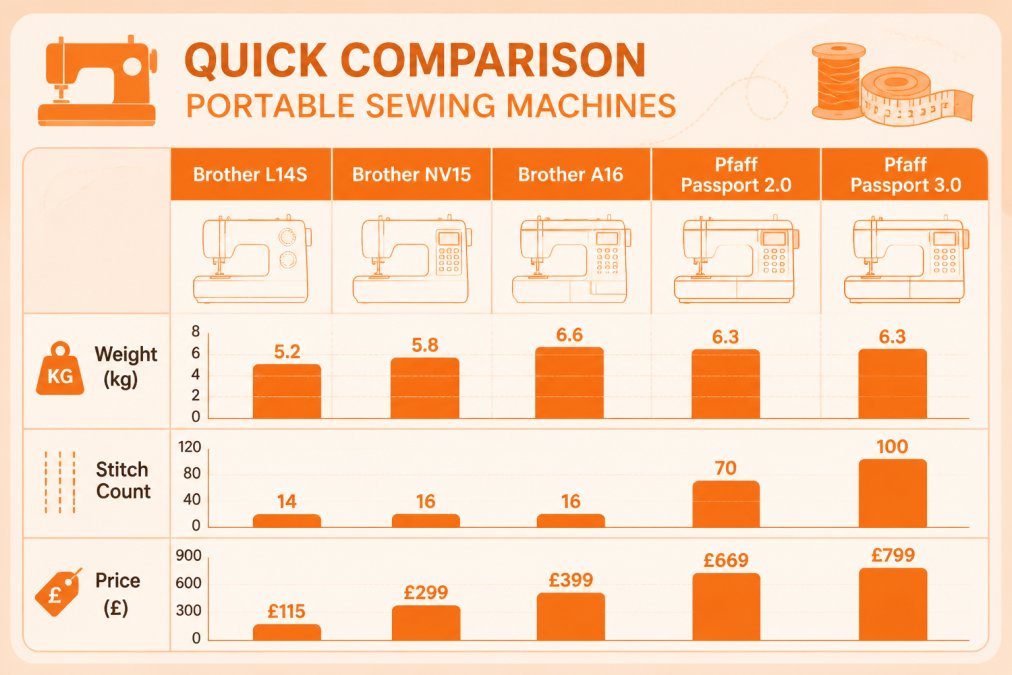
Quick Comparison Table of Portable Sewing Machines
| Machine | Weight | Stitches | Price | Best For |
|---|---|---|---|---|
| Brother L14S | 5.2 kg | 14 | £115 | Absolute beginners, simple repairs |
| Brother Innov-is NV15 | 5.8 kg | 16 | £299 | First computerised machine, workshops |
| Brother Innov-is A16 | 6.6 kg | 16 | £399 | Beginners wanting LCD screen, classes |
| Pfaff Passport 2.0 | 6.3 kg | 70 | £669 | Quilting, more stitch variety |
| Pfaff Passport 3.0 | 6.3 kg | 100 | £799 | Advanced quilting, automatic thread cutting |
Brother L14S: The Budget-Friendly Entry Point
The Brother L14S is a lightweight option on this list, making it genuinely easy to carry between locations. With 14 stitches and a top-loading bobbin system, it handles everyday mending, simple dressmaking, and basic craft projects without overwhelming a beginner.

This machine works best for absolute newcomers or anyone who needs a spare machine for light work. The LED lighting is clear, the controls are straightforward, and the price at £115 means you're not risking much if you discover sewing isn't for you. The trade-off is stitch variety, if your class involves decorative work or quilting, you'll feel the limitation quickly.
For students taking a first sewing class or hobbyists mending clothes at home, this machine delivers solid value. It's quiet, reliable, and genuinely portable. The Brother L14S from Fabric Mouse is a lightweight, easy-to-use sewing machine that’s perfect for beginners and simple sewing tasks, making transport straightforward.
Brother Innov-is NV15: Computerised Simplicity for Workshops
The Brother Innov-is NV15 steps up to computerised control with 16 essential stitches and a clear LCD display. It's still lightweight enough for regular transport, but the jog dial and screen make stitch selection faster than mechanical dials.

This machine suits workshop environments where you're moving between machines or teaching others. The start/stop button means you can sew without a foot pedal if the class setup doesn't allow space for one. The drop-in bobbin and needle threader simplify setup on unfamiliar tables.
The 16 stitches cover everyday utility work, buttonholes, and basic decoration. You're not getting quilting-specific features, but for general sewing classes, that's rarely needed. The LED light is bright, and the machine stays quiet even when other sewists are working nearby.
At £299, the NV15 costs roughly 2.5 times more than the L14S, but you gain computerised stitch selection and a more polished feel. For students moving from absolute beginner to intermediate work, this is where many choose to invest. Fabric Mouse supplies this machine with free UK delivery and setup guidance.
Brother Innov-is A16: Compact Power with LCD Control
The Brother Innov-is A16 adds a backlit LCD screen and jog dial to the NV15's feature set, making stitch selection even more intuitive. At 6.6 kg, it's the heaviest Brother on this list, but the extra weight comes from reinforced components that make it feel more stable on borrowed tables.

The A16 includes three automatic one-step buttonhole styles, with adjustable stitch length and width. For dressmaking classes or anyone working on garments with fitted details, this flexibility matters. The speed slider lets you slow down for precise corners, which is especially useful when learning alongside others in a shared space.
This machine bridges the gap between budget models and premium quilting machines. At £399, it costs more than the NV15 but significantly less than the Pfaff options. The Brother Innov-is A16 is supplied with a soft cover, though you might want to invest in a dedicated sewing machine bag for extra protection during transport.
Pfaff Passport 2.0: Lightweight Quilting Workhorse
The Pfaff Passport 2.0 is a computerised machine with 70 stitches and the Original IDT integrated dual feed system. This feed mechanism helps top and bottom fabric layers move together, which makes quilting and topstitching significantly easier than on machines without it.
At 6.3 kg, it weighs the same as the A16 but delivers far more stitch variety. If your class involves quilting or decorative work, the extra stitches become genuinely useful. The speed slider and needle up/down control give you precision when pivoting corners, something quilters appreciate.
The built-in needle threader and included hard cover add practical convenience. The start/stop button means you can sew without a foot controller, which matters in workshop settings where space is tight. At £669, this machine costs roughly 2.2 times more than the A16, but quilters often find the IDT system justifies the investment.
The Pfaff Passport 2.0 from Fabric Mouse suits sewists who know quilting will be part of their practice. If you're uncertain whether quilting is for you, start with a Brother machine first.
Pfaff Passport 3.0: Premium Features in a Portable Package
The Pfaff Passport 3.0 brings the IDT system and adds automatic thread snips plus 100 stitches. This machine handles every stitch type you're likely to encounter in classes, utility, decorative, and quilting work all feel natural on it.
The automatic thread snips cut upper and bobbin threads at a button press, which saves time between seams and reduces the need to reach for scissors. For anyone sewing for extended periods in a workshop, this feature becomes surprisingly valuable. The hard cover protects the machine during transport, and the speed slider gives you control over your pace.
Pfaff Passport 2.0 Computerised Sewing Machine →
The Pfaff Passport 3.0 suits intermediate to advanced sewists who know they'll use the extra stitches and features regularly. If you're still exploring what type of sewing you enjoy, this investment is premature. But for quilters and dressmakers committed to their craft, it's a machine that grows with your skills.
How to Transport a Sewing Machine Safely to Classes
Transporting a portable sewing machine safely requires more than just dropping it in a bag. Machines are precision tools, vibration, impact, and temperature changes during transport can affect tension, stitch quality, and alignment.
Always use the machine's original hard cover or a dedicated sewing machine bag. The Pfaff machines come with hard covers included. If you're using a Brother machine, consider upgrading to a sturdy cotton machine bag for extra cushioning. The bag's reinforced handles make regular carrying easier on your hands.
Pack your machine in a car rather than public transport when possible. Buses and trains expose machines to more vibration and rough handling. Keep the machine upright during transport, laying it on its side can shift internal components slightly. Never place heavy items on top of the machine bag.
Before leaving home, secure the presser foot in the down position. This prevents small parts from moving during transit. If you're driving to classes, place the machine bag on the floor rather than a seat, it's more stable and less likely to shift if you brake suddenly.
At your destination, allow 15 minutes before sewing for the machine to adjust to the new environment. Temperature and humidity changes affect tension slightly. Set up your machine on a stable, level table, uneven surfaces cause stitching problems that seem like machine faults but often resolve once you find a proper surface.
Building an Essential Sewing Kit for Workshops
A portable sewing machine is only part of what you need for classes. The right accessories transform a basic setup into a functional workspace, even on unfamiliar tables.
Start with measuring tools. A Prym seam gauge at £3.50 helps you mark consistent seam allowances and check stitch length. The flexible plastic design clings to fabric without slipping. A Prym magnetic seam guide at £4.00 fits easily in a sewing kit. Scissors that slip during cutting create uneven seams and frustration.
A Standard Horn Extension Table at £95.95 extends your work surface up to 22" x 11 3/4", which helps with larger projects. The adjustable legs fit most machines, and the acrylic construction is durable enough for regular use in workshops.
For quilters, a Deluxe Horn Extension Table at £139.95 offers a larger surface at 24"x18". Both tables are portable and customisable to fit your specific machine.
FEIYUE Sewing Machines for Students and Class Work
When choosing between FEIYUE and Brother or Pfaff models, consider whether your class emphasises technique fundamentals or creative stitch work. FEIYUE excels at the former. For classes involving quilting, embellishment, or advanced dressmaking, the Brother and Pfaff machines offer features that expand what's possible.
Fabric Mouse stocks FEIYUE industrial sewing machines for professionals and serious hobbyists who need machines that handle heavy fabrics and extended use.
Choosing a portable sewing machine for classes means balancing weight, functionality, and budget against the reality of moving equipment weekly and sharing workspace with others. The Brother L14S delivers unbeatable value for beginners. The Brother Innov-is NV15 and A16 suit students ready for computerised control. The Pfaff Passport machines reward quilters and dressmakers with stitch variety and precision feeding.
At Fabric Mouse, we help sewists find machines that match their actual practice, not aspirational projects. Contact us for guidance on which portable machine suits your class work, and we'll ensure you leave with a machine that's properly set up and ready to use.
Frequently Asked Questions
What features should I look for in a portable sewing machine for classes?
Look for lightweight design (under 7 kg), compact dimensions for easy storage, a hard or soft carrying case, and straightforward stitch selection. Speed control and a start/stop button without a foot pedal are valuable for classroom settings. Built-in needle threaders reduce setup time between projects. Machines with 14-100 stitches offer enough variety for most class work without overwhelming beginners.
How much should a reliable portable sewing machine for classes weigh?
Most portable sewing machines for classes weigh between 6 and 7 kg. The Brother Innov-is A16 comes in at 6.6 kg. The Pfaff Passport models are similarly compact at 6.3 kg. This weight range balances durability with genuine portability, so you can carry your machine comfortably between classes without fatigue.
Do I need a hard case for transporting my portable sewing machine to classes?
A hard case offers the best protection, particularly if you're transporting your machine regularly. Most portable sewing machines for classes come with either a hard cover or soft carrying bag. Hard cases shield against damage from bumps and pressure, whilst soft bags are lighter and take up less space. Consider your commute: cars and short distances work fine with soft covers, but frequent public transport or longer journeys benefit from hard cases.
Can FEIYUE machines be used for beginner sewing workshops?
FEIYUE sewing machines are a good option for beginners learning fundamental techniques. It's worth checking with specialist retailers for current stock and models suited to your workshop's specific needs and class requirements.
Related Posts

Best Fabric Drape for Summer Dresses

Why Your Sewing Machine Smells Like Burning

How to Choose Your First Sewing Machine

Best Embroidery Machine for Small Business 2026

Evaluating Fabric Quality When Buying Online

Sewing Machine Repair Service: Your Guide
