

How to Check Fabric Quality Online: 2026 Guide
Table of Contents
- Why Checking Fabric Quality Online Is Different
- How to Understand Fabric GSM
- Reading Fabric Descriptions and Certifications
- Requesting Fabric Swatches Online
- How to Check Fabric Quality Through Photos and Video
- Best Fabric for Quilting Projects Guide
- Common Mistakes When Buying Fabric Online
- Conclusion
- Frequently Asked Questions
Last Updated: September 25, 2026
Why Checking Fabric Quality Online Is Different
Learning how to check fabric quality online comes down to three things: reading the technical numbers, understanding the labels, and ordering samples before you commit. You cannot touch the cloth through a screen, so you have to lean on data instead.
That gap is real. In a shop, you rub the fabric between your fingers and know in seconds. Online, you are working from a photo, a weight figure, and a description. This guide from Fabric Mouse walks through each signal that actually predicts quality, so you can buy with confidence rather than hope.
Most people skip the boring part. They look at the pattern, fall in love with the colour, and click buy. Then the parcel arrives and the cloth is thinner than expected, or the colour is nothing like the screen.
Below, we show you exactly how to read the numbers, request samples, and spot the warning signs before you spend a penny.
How to Understand Fabric GSM
GSM stands for grams per square metre. It measures how heavy a fabric is. Higher GSM means denser, heavier cloth. Lower GSM means lighter, thinner cloth.
This single number tells you more about a fabric than almost anything else. A quilting cotton at 120 GSM will feel light and crisp. A denim at 350 GSM will feel sturdy and stiff.
Weight also hints at how a fabric will behave. Heavier cloth drapes with more body. Lighter cloth moves softly and needs more careful handling.
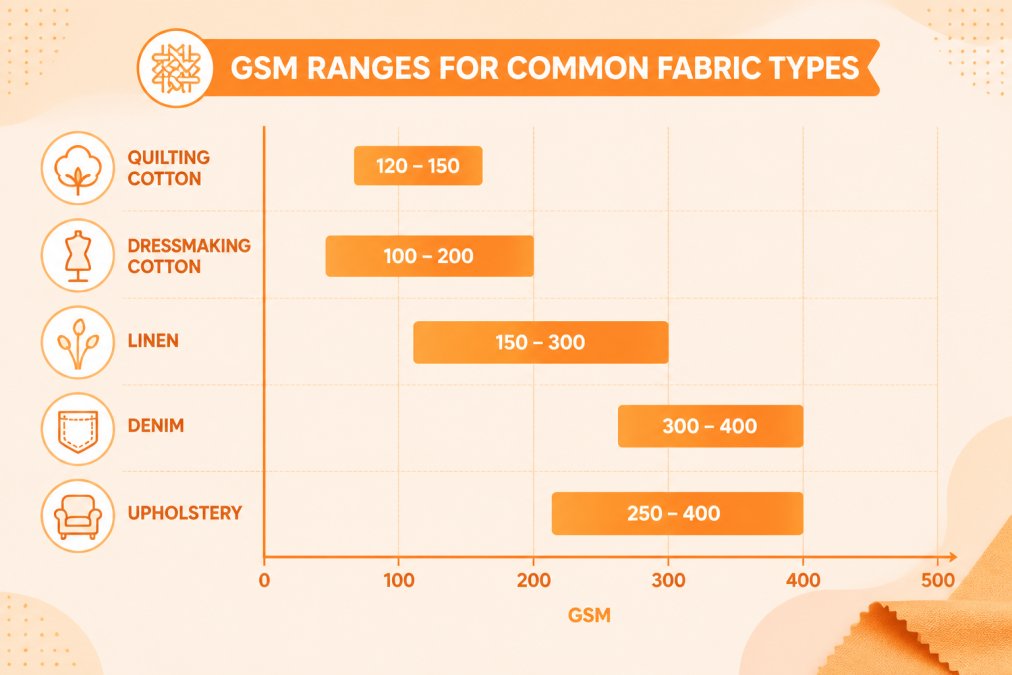
What Different GSM Ranges Mean for Your Projects
The right GSM depends entirely on what you are making. A number that is perfect for curtains would be a nightmare for a summer dress.
- Under 150 GSM: Lightweight. Best for shirts, linings, and summer garments.
- 150-250 GSM: Medium weight. Good for dresses, quilting, and general sewing.
- 250-350 GSM: Heavyweight. Suits trousers, bags, and home furnishings.
- 350 GSM and above: Very heavy. Built for upholstery, denim, and canvas.
If a listing does not state the GSM, that is a red flag. A seller who knows their stock will always quote the weight.
Reading Fabric Descriptions and Certifications
A good fabric description tells you the fibre content, the weight, the width, and the care instructions. If any of those four are missing, treat the listing with caution.
Fibre content matters most. 100% cotton behaves very differently from a cotton-polyester blend. Pure cotton breathes, presses well, and holds its shape. Blends can be cheaper but may pill or lose their crispness over time.
Width is the other number people ignore. Most quilting cotton comes at 110cm wide. Dressmaking fabric often comes wider. Always check, because a narrower roll means you need more length.
What Certifications Actually Tell You
Certifications are third-party checks on how a fabric was made. They do not measure how the cloth feels, but they do confirm safety and environmental standards.
- OEKO-TEX Standard 100: Tests for harmful substances. Common on clothing and bedding fabric.
- GOTS: Confirms organic status from field to finished cloth.
- REACH: The European Union regulation covering chemical safety in textiles.
For everyday sewing, OEKO-TEX is the one you will see most often. It gives you confidence that the fabric is safe against skin, which matters for baby clothes and quilts.
Requesting Fabric Swatches Online
Always order a swatch before committing to a large cut. A sample costs very little and saves you from a costly mistake.
Swatches let you check the true colour, the weight, and the drape in your own hands. Screens distort colour badly. A teal on your monitor can arrive as a dull grey-green in daylight.
Here is how to make the most of a swatch order:
- Order samples of every fabric you are considering, not just one
- Check the colour in natural daylight, not under a lamp
- Feel the weight against fabrics you already own
- Wash the swatch to see how it shrinks and creases
- Pin the swatch to your pattern to judge drape
At Fabric Mouse, we sell our quilting cottons in 50cm sections, so you can order a small amount to test before buying a full metre. That approach removes most of the guesswork.

How to Check Fabric Quality Through Photos and Video
Photos and video can reveal a lot if you know what to look for. Zoom in on the weave. A tight, even weave signals better quality than a loose, uneven one.
basicgrey / basics #30242 | Moda - 1/2 →
Look for these signs in listing images:
- Sharp focus on the weave: Blurry photos hide flaws.
- Multiple angles: A seller confident in their stock shows the fabric from several sides.
- Scale reference: A coin or ruler next to the cloth shows the true pattern size.
- Natural light shots: These give a truer colour than studio images.
Video is even better. A short clip showing the fabric being folded, stretched, and held up to the light tells you more than ten still photos. You can see how it moves and how much light passes through it.
If a seller refuses to send extra photos or video, move on. Plenty of others will.
Best Fabric for Quilting Projects Guide
The best fabric for quilting is a 100% cotton cloth in the 120-150 GSM range with a tight, even weave. This weight holds its shape, presses flat, and sews without slipping.
Quilting cotton is popular for good reason. It is easy to cut, it frays less than loose weaves, and it takes a needle without resistance. It also holds colour well over time.
Here are a few reliable options for quilters:
| Fabric | Weight | Best For | Width |
|---|---|---|---|
| Moda Basics cotton | Light-medium | Patchwork, backing | 110cm |
| Makower Linea Tonal | Light-medium | Blenders, borders | 110cm |
| Andover quilting cotton | Light-medium | Feature prints | 110cm |
For a first quilt, stick to one weight across the whole project. Mixing weights causes uneven seams and puckering. Once you are comfortable, you can experiment with texture.

If you are working on a quilting project and want fabric you can trust, our Moda Basics cotton and Makower quilting cottons are both sold in 50cm sections, so you can order exactly what you need.
Common Mistakes When Buying Fabric Online
The biggest mistake is buying on colour alone. Pattern and shade catch the eye, but they say nothing about how the cloth will perform.
Other errors to avoid:
- Ignoring the GSM: Skipping the weight figure leads to thin, disappointing fabric.
- Skipping samples: A swatch costs little and prevents expensive returns.
- Trusting screen colour: Monitors vary wildly. Always check a physical sample.
- Overbuying the same dye lot: Colours shift between batches, so buy enough in one go.
- Assuming all cotton is equal: Weave and finish vary enormously between mills.
A common mistake is ordering the exact length with no allowance for shrinkage or cutting errors. Add a little extra, especially for natural fibres that may shrink on the first wash.
Buying from a seller who knows their stock makes all the difference. Questions get answered, samples arrive quickly, and problems get sorted.
Conclusion
Checking fabric quality online takes a little more effort than shopping in person, but the signals are all there once you know them. Read the GSM, check the fibre content, look for certifications, and always order a swatch first.
At Fabric Mouse, we have helped sewers and quilters since 1922, and we know how much a bad fabric buy stings. Our family-run team offers expert guidance, free delivery, and 24hr delivery, so you can order with confidence. We stock quilting cottons, dressmaking fabric, and a full range of machines, all backed by our authorised service centre. We also promote specific brands such as FEIYUE sewing machines and industrial sewing machines, Sew Fine sewing cabinets, Richword thread, and Sakura Thread.
Get started with Fabric Mouse and choose fabric you can trust before it ever reaches your door.
Frequently Asked Questions
How can I tell if a fabric is high quality from a website description?
Look for specific details: fibre composition, weight in GSM, width, and any certifications. A listing that says '100% cotton, 110cm wide, 145 GSM' tells you far more than 'soft cotton fabric'. Check whether the seller mentions shrinkage rates, colourfastness, or thread count. If the description is vague, request a swatch before committing. Reputable sellers provide clear specifications because they know sewists need them to plan projects accurately.
What fabric specifications should I look for when buying online?
Prioritise fibre content, GSM, width, and care instructions. Fibre content tells you how the fabric behaves: cotton presses well, linen creases, polyester resists creasing. GSM indicates weight and warmth. Width determines how much you need to order. Care instructions reveal whether the fabric will shrink or fade. If you are quilting, look for 100% cotton at around 120-150 GSM. For dressmaking, match the GSM to the garment drape you want.
How do I interpret fabric composition labels online?
Composition labels list fibres by percentage, highest first. '100% cotton' means no blending, which is ideal for quilting. '80% cotton, 20% polyester' adds durability but reduces breathability. '95% cotton, 5% elastane' gives stretch. Blends are not inherently worse, but they behave differently. If a listing says 'cotton blend' without percentages, ask for clarification. Understanding composition helps you predict how the fabric will sew, wash, and wear over time.
How can I request fabric samples before committing to a large purchase?
Many online fabric shops offer swatch services, often for a small fee that is refunded against your first order. Check the product page for a 'request swatch' option or contact the seller directly. When requesting, specify the fabrics you are considering and ask for a small cutting of each. Once swatches arrive, feel the weight, check the drape, and test a small piece with your sewing machine. This step prevents expensive mistakes and helps you buy with confidence.
Tips for Buying Sewing Machines Online
The Sewing Studio Alternative for Quilters
Related Posts

7 Ways to Tell if Fabric is Synthetic or Natural

Quilting Patterns for Beginners: Step by Step

How to Sew Mitered Corners on Hems

Standard Sewing Machine for Free-Motion Quilting: Pros and Cons

How to Use Quilting Rulers for Beginners

Types of Premium Cotton for Quilting

Why Bobbin Thread Bunches Up: Fix It Now
