

7 Ways to Tell if Fabric is Synthetic or Natural
Last Updated: 24 October 2026
Quick Summary
You can tell if fabric is synthetic or natural by performing a burn test: natural fibres like cotton smell like burnt paper and leave soft ash, whilst synthetics like polyester melt and smell like chemical plastic, leaving a hard bead. The touch test and appearance test offer quick clues, with natural fibres feeling warm and textured whilst synthetics feel plastic-like and shiny.
- The burn test is the most reliable method to tell if fabric is synthetic or natural
- Natural fibres smell like burnt hair or paper when burned; synthetics smell like melting plastic
- Cotton burns quickly with bright flame and leaves soft grey ash that crumbles easily
- Polyester melts instead of burning and leaves a hard dark plastic bead that cannot be crushed
- The touch test and water absorption test provide additional confirmation alongside the burn test
Table of Contents
- Why Knowing Natural vs Synthetic Fibres Matters for Your Projects
- Understanding Natural vs Synthetic Fibres
- How to Identify Fabric Without a Label
- The Fabric Burn Test: A Reliable Identification Method
- Cotton vs Polyester Fabric: Key Differences
- Other Quick Tests for Fabric Identification
- Choosing Quality Fabrics for Your Sewing Projects
- Frequently Asked Questions
Why Knowing Natural vs Synthetic Fibres Matters for Your Projects
Learning how to tell if fabric is synthetic or natural changes how you care for it, how it performs, and whether it suits your project. A natural cotton dress behaves completely differently from a polyester one. One breathes and wrinkles. The other resists creasing but traps heat. Knowing which you're holding before you cut into it prevents costly mistakes.
At Fabric Mouse, we help sewers and quilters identify fabrics with confidence, especially when buying online or from unlabelled remnants. The methods we cover here work whether you're examining a bolt in a shop or a fabric swatch that arrived without tags.
Understanding Natural vs Synthetic Fibres
Natural fibres come from plants and animals. Cotton, wool, linen, and silk are the most common. Synthetic fibres are made in factories from chemicals. Polyester, nylon, and acrylic are everywhere.
The difference matters because natural and synthetic fibres behave differently:
- Natural fibres absorb moisture, breathe, wrinkle easily, and soften with washing
- Synthetic fibres resist moisture, trap heat, resist wrinkles, and hold their shape longer
- Blends combine both types and show mixed behaviour
When you know which you have, you choose the right projects. Wool works beautifully for winter garments. Polyester works better for outdoor cushions that need to shed water.
How to Identify Fabric Without a Label
Most fabric comes with a label stating fibre content. But remnants, vintage fabrics, and some online purchases don't. You can still identify what you're holding using simple tests.
The Touch Test
Feel the fabric between your fingers. Natural fibres feel different from synthetics.
Natural fibres tend to feel warm and slightly textured. Wool feels soft but can be scratchy. Cotton feels smooth and cool. Silk feels slippery and cool.
Synthetic fibres feel plastic-like or slippery. Polyester feels smooth but also feels slightly artificial. Nylon feels silky but also plastic.
This test isn't foolproof on its own. A high-quality polyester can feel surprisingly natural. But it's a useful starting point, especially combined with other tests.
The Appearance Test
Look closely at how light reflects off the fabric. Natural fibres scatter light differently than synthetics.
Cotton and linen have a matte finish. They don't shine much. Wool has a subtle sheen but looks dull overall.
Polyester and nylon shine noticeably. They reflect light like plastic. Silk shines but with a softer, warmer glow than polyester.
Hold the fabric up to a window. Does it glow? Synthetics usually do. Does it look dull and matte? Likely natural.
This works especially well for identifying polyester blends. Even 50% polyester will show more shine than pure cotton.
The Fabric Burn Test: A Reliable Identification Method
The burn test is the most reliable way to tell if fabric is synthetic or natural. It works because different fibres burn differently. Natural fibres smell like burnt hair or paper. Synthetics smell like melting plastic.
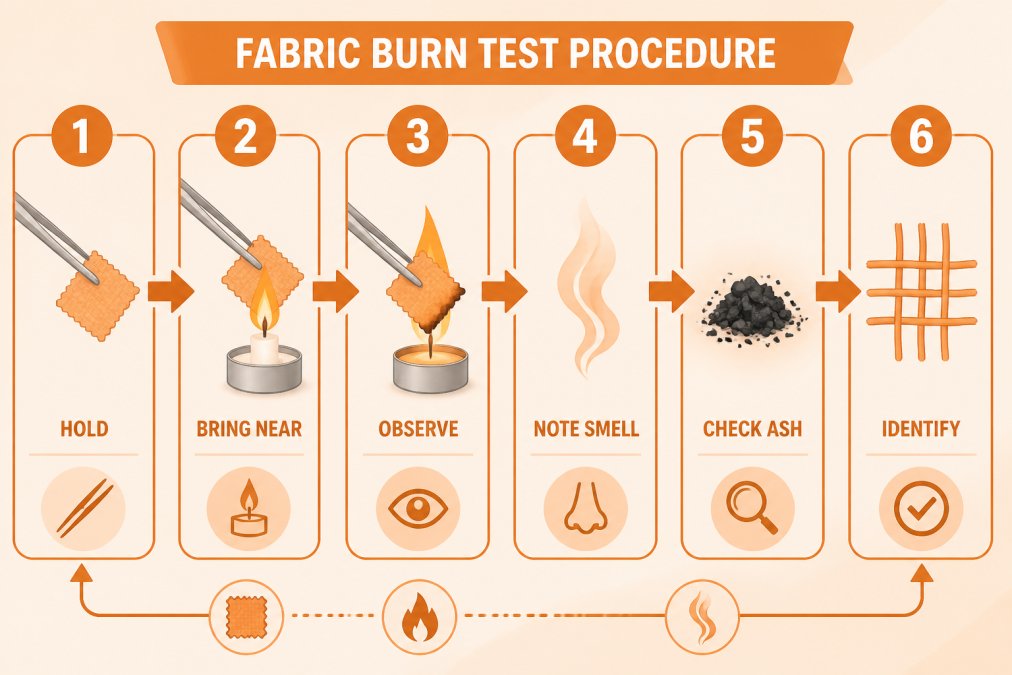
How to Safely Perform the Burn Test
You need a small fabric scrap, scissors, and a lighter or match. Work near a sink or bowl of water. Never lean over the flame.
Step 1: Cut a small scrap Cut a piece roughly 2 centimetres square. Larger pieces burn too hot and are harder to control.
Step 2: Hold it safely Use tweezers or pliers to hold the scrap. Never hold it with your fingers. Keep your face away from the flame.
Step 3: Bring it near the flame Bring the scrap close to a lighter flame without touching it. Watch how it reacts. Some fabrics ignite instantly. Others resist.
Step 4: Observe the flame Watch the colour and behaviour of the flame. Does it burn quickly or slowly? Does it produce a lot of smoke?
Step 5: Smell the smoke Once the scrap is burning, note the smell. Keep your nose at a safe distance. Never inhale directly.
Step 6: Check the ash Let the scrap burn completely or extinguish it in water. Look at what's left. Does it turn to soft ash? Does it melt into a hard ball?
What Different Burn Results Tell You
Cotton burns quickly with a bright flame. It smells like burnt paper. It leaves soft, grey ash that crumbles easily. The ash is so fine it blows away.
Wool burns slowly and smells like burnt hair. It curls away from the flame. It leaves a hard, dark, crispy ash that you can crush between your fingers.
Silk burns slowly and smells like burnt hair, similar to wool. It leaves a black, crispy ash. The key difference is that silk ash is more brittle than wool ash.
Polyester melts instead of burning. It shrinks away from the flame quickly. It smells like chemical plastic, sharp and unpleasant. It leaves a hard, dark plastic bead that you cannot crush. This bead is extremely hot, so be careful.
Abraham Moon The Dales Collection Wool Fabric by the Metre →
Nylon melts like polyester but burns slightly faster. It also smells plastic-like. It leaves a hard, amber-coloured bead instead of black.
Acrylic burns quickly with a bright flame. It smells like burning plastic but slightly different from polyester. It leaves a hard black ash.
| Fibre | Burn Speed | Smell | Flame Colour | Ash Type |
|---|---|---|---|---|
| Cotton | Fast | Burnt paper | Bright yellow | Soft grey ash |
| Wool | Slow | Burnt hair | Orange | Hard dark crisp |
| Silk | Slow | Burnt hair | Orange | Black crispy |
| Polyester | Very fast, melts | Chemical plastic | Yellow | Hard dark bead |
| Nylon | Fast, melts | Chemical plastic | Yellow | Hard amber bead |
| Acrylic | Fast | Plastic smell | Bright | Hard black ash |
Cotton vs Polyester Fabric: Key Differences
Cotton and polyester are the two most common fabrics you'll encounter. Understanding their differences helps you choose the right one for your project.
Cotton is natural. It comes from cotton plants. It breathes well, absorbs moisture, and wrinkles easily. It softens with washing. It's comfortable for clothing but requires ironing.
Polyester is synthetic. It's made from petroleum-based chemicals. It resists moisture, resists wrinkles, and holds its shape. It doesn't soften with washing. It's practical for outdoor items and upholstery but can feel plastic-like.
Cotton shrinks when washed in hot water. Polyester doesn't shrink. This matters when you're choosing between them for a project.
For quilting, cotton is the standard. It's easier to piece, easier to quilt, and easier to press. For home furnishings that need durability, polyester or cotton-polyester blends work better.
When you're buying fabric online without feeling it first, knowing the fibre content helps you predict how it will behave. Evaluating Fabric Quality When Buying Online covers how to assess other qualities you can't see through a screen, and How to Check Fabric Quality Online: 2026 Guide walks you through practical checks before you commit to a purchase.
Other Quick Tests for Fabric Identification
The burn test is most reliable, but these additional tests help confirm your findings.
The Water Absorption Test
Natural fibres absorb water. Synthetic fibres repel it.
Drop a small amount of water onto the fabric. Does it soak in quickly? Natural fibre. Does it bead up and roll off? Synthetic.
This test works best on plain, unfinished fabrics. Finished or treated fabrics may resist water regardless of fibre type.
The Static Test
Rub the fabric quickly with your hand or a piece of wool. Does it create static electricity and attract lint?
Synthetics create more static than natural fibres. If the fabric holds a strong charge and attracts lint easily, it's likely synthetic or a high synthetic blend.
Natural fibres create less static because they absorb moisture from the air.
This test is less reliable than the burn test but useful as additional confirmation.
Choosing Quality Fabrics for Your Sewing Projects
Once you know whether a fabric is natural or synthetic, you can choose the right one for what you're making.
For garments that touch skin, natural fibres usually feel better. Cotton and linen breathe. Wool keeps you warm. Silk drapes beautifully. Synthetics can feel uncomfortable against skin for extended wear.
For items that need durability and easy care, synthetics or blends work well. Outdoor cushions, bags, and upholstery benefit from polyester's wrinkle resistance and moisture repellence.
For quilting, quality cotton is essential. Explore Abraham Moon Naturally Moon Wool Fabric by the Metre to see how premium natural fibres perform in home projects. It pieces cleanly, presses crisply, and holds its shape. The Abraham Moon Naturally Moon Wool Fabric by the Metre demonstrates the quality of natural wool fabrics for home projects, with its traditional plaid patterns and mottled twills offering timeless appeal.

When you're buying fabric online, knowing how to identify what you're getting protects your investment. Check the label if one exists. If not, the burn test gives you certainty before you cut into it.
Natural and synthetic fibres behave so differently that misidentifying one can ruin a project. A natural fabric needs different care, different storage, and different handling than a synthetic one. Spending two minutes on a burn test saves hours of frustration later.
The methods we've covered here work reliably. The touch test and appearance test give you quick clues. The burn test confirms your suspicion with certainty. Combined, they let you identify almost any fabric accurately.
Frequently Asked Questions
How can you tell if fabric is natural or synthetic without a label?
Use multiple tests together: examine how the fabric feels (natural fibres are usually softer and breathe better), observe how it drapes, and perform the burn test. Natural fibres like cotton and wool burn with a paper-like or hair-like smell and leave a fine ash. Synthetic fabrics melt and emit a chemical odour. Combining these methods gives you reliable identification even without packaging.
What does a burn test reveal about fabric?
The burn test shows whether a fabric is natural or synthetic by observing the flame behaviour, smoke colour, smell, and ash type. Natural fibres burn steadily and leave fine ash that crumbles easily. Synthetic fabrics melt, shrink from the flame, and leave a hard, plastic-like bead. The smell is also distinctive: cotton and wool smell like burning paper or hair, whilst polyester and nylon produce a chemical smell.
How can you tell cotton from polyester by touch?
Cotton feels soft, breathable, and slightly absorbent to the touch. It wrinkles easily and has a natural texture. Polyester feels smoother, sometimes slippery, and has a slight sheen. It resists wrinkles and doesn't absorb moisture as readily. When you pull cotton, it may feel slightly stretchy but returns to shape; polyester stretches more and holds its shape differently. These tactile differences help distinguish cotton vs polyester fabric quickly.
Can a fabric be made from both natural and synthetic fibres?
Yes, many fabrics are blends combining natural and synthetic fibres. A cotton-polyester blend, for example, offers the breathability of cotton with the durability and wrinkle resistance of polyester. Blended fabrics often show mixed burn test results: they may burn steadily at first like natural fibres, then melt like synthetics. Always check the label if available, as blends behave differently from pure natural or synthetic fabrics.
Identifying fabric correctly is the foundation of choosing the right materials for your projects. Whether you're shopping online or examining a remnant, these tests help you make informed decisions. At Fabric Mouse, we stock premium natural and synthetic fabrics alongside expert advice to help you select exactly what your project needs. Contact us if you'd like guidance on choosing the right fibre for your next sewing or quilting project.

Related Posts

Quilting Patterns for Beginners: Step by Step

How to Sew Mitered Corners on Hems

Standard Sewing Machine for Free-Motion Quilting: Pros and Cons

How to Use Quilting Rulers for Beginners

Types of Premium Cotton for Quilting

Why Bobbin Thread Bunches Up: Fix It Now
