

Evaluating Fabric Quality When Buying Online
Table of Contents
- Why Evaluating Fabric Quality Matters Before You Buy
- Check Fibre Composition and Content Labels
- Understanding Fabric GSM Explained
- Assess Weight, Drape, and Texture From Product Descriptions
- Request Fabric Swatch Samples Before Committing
- Look for Fabric Certifications and Quality Standards
- Best Fabric for Quilting Projects
- Common Mistakes to Avoid When Buying Fabric Online
- Your Checklist for Evaluating Fabric Quality
- Frequently Asked Questions
Last Updated: September 28, 2026
Why Evaluating Fabric Quality Matters Before You Buy
When you order fabric online, you can't feel the weight in your hands or drape it across your arm. This makes evaluating fabric quality essential before committing to a purchase. The difference between quality fabric and poor-quality alternatives can make or break your project, whether you're quilting, dressmaking, or creating something entirely new.
Quality fabric holds its shape through washing, resists pilling, and maintains colour vibrancy. Poor-quality fabric shrinks unpredictably, fades quickly, and falls apart after a few uses. Many sewers become frustrated with their finished projects because they bought fabric without properly assessing its characteristics first.
The good news is that you don't need to be in a physical shop to evaluate fabric properly. With the right knowledge, you can make confident purchasing decisions online and receive fabrics that will serve your projects well for years to come.
Check Fibre Composition and Content Labels
The fibre content on a fabric label tells you everything about how the fabric will behave. Natural fibres like cotton breathe well and feel soft against skin, while synthetic blends add durability and reduce wrinkles. A 100% cotton fabric will behave completely differently from a 50% cotton, 50% polyester blend.
When buying online, always check the fibre composition listed in the product description. The label should clearly state percentages: "100% cotton," "80% cotton, 20% polyester," or similar. This information is your foundation for understanding how the fabric will perform.
Cotton is the most common choice for quilting and dressmaking because it's easy to work with and produces clean seams. Linen adds structure but requires careful handling. Synthetic fibres like polyester add stretch and durability, which matters for different projects.
Look for fabrics that list natural fibres as their primary component if you're making garments or quilts intended to last. Blended fabrics work well for projects where durability matters more than breathability, think bags, cushion covers, or home décor items.
Understanding Fabric GSM Explained
Fabric GSM (grams per square metre) measures how heavy or light a fabric is. This single number tells you whether a fabric is suitable for your project. A lightweight fabric rated at 100 GSM feels delicate and drapes beautifully. A heavyweight fabric at 300 GSM feels substantial and holds its shape firmly.
Different projects require different GSM ranges. Quilting cotton typically sits between 150-200 GSM, heavy enough to hold stitches well but light enough to piece together easily. Lightweight cotton suitable for garments falls around 100-150 GSM. Canvas and heavyweight fabrics used for bags and upholstery range from 300-500 GSM or higher.
When you're evaluating fabric quality online, GSM gives you concrete information that transcends subjective descriptions. You know exactly what you're getting before the fabric arrives at your door.
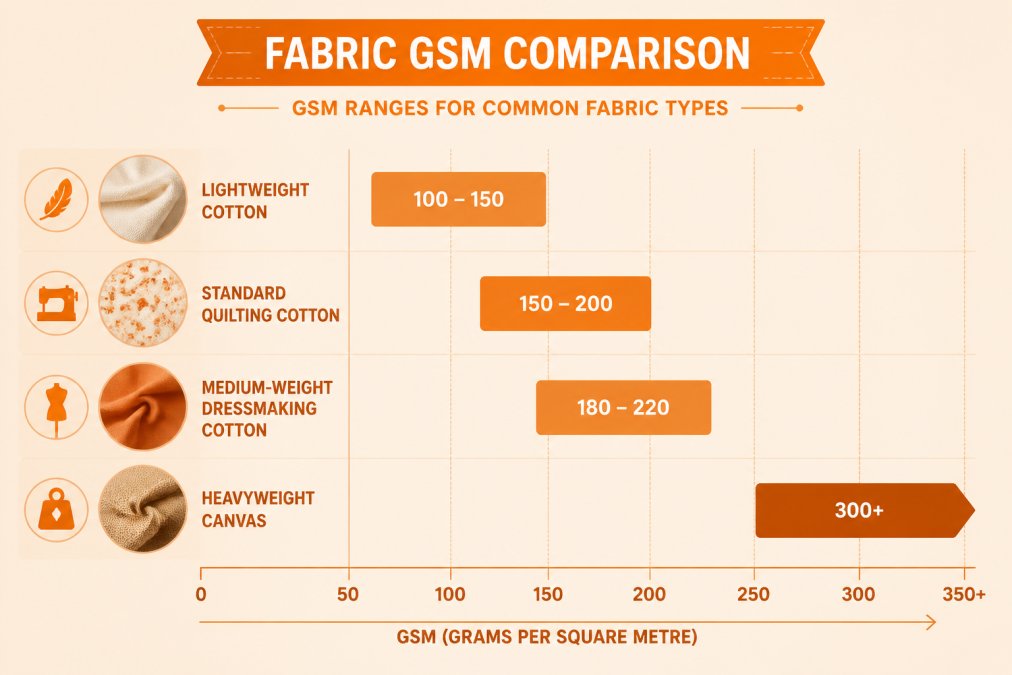
The product description should always include GSM information. If it doesn't, that's a red flag. Reputable suppliers provide this specification because it matters. GSM also affects price, heavier fabrics cost more because they use more fibre per metre.
Assess Weight, Drape, and Texture From Product Descriptions
Product descriptions online should paint a clear picture of how a fabric feels and moves. Look for specific language: "soft to the touch," "crisp finish," "fluid drape," or "structured weight." These descriptions give you clues about the fabric's characteristics without needing to feel it physically.
Drape refers to how a fabric falls when unsupported. A fabric with poor drape feels stiff and won't move naturally in a finished garment. A fabric with excellent drape flows gracefully. Quilting fabrics need minimal drape, you want them to hold their pieced shapes. Dressmaking fabrics benefit from moderate to good drape, especially for garments like skirts or dresses.
Texture matters for both aesthetics and functionality. A smooth, tightly woven fabric will produce crisp seams and clean lines. A loosely woven or textured fabric creates a more relaxed appearance and may be prone to fraying.
When reading online descriptions, cross-reference multiple product listings for the same fabric type. If one seller describes a quilting cotton as "crisp and structured" and another describes an identical fabric as "soft and fluid," you've found inconsistent information, a signal to investigate further or request a swatch.
Request Fabric Swatch Samples Before Committing
This is the single most important step in evaluating fabric quality when buying online. A fabric swatch sample, usually a small piece measuring 10-15 centimetres, lets you assess colour, texture, weight, and how the fabric will actually look in your space or on your project.
Many suppliers offer swatch samples at a small cost or even free. Requesting swatches is straightforward and helps you make confident decisions before placing a larger order. Hold the swatch up to natural light and indoor light. See how the colour shifts. Feel the weight and texture between your fingers. Drape it gently to understand how it moves.
Swatches also solve the persistent problem of colour variation between screens. What looks navy blue on your monitor might photograph as purple in reality. A physical swatch eliminates this guesswork entirely.
Order swatches from multiple suppliers if you're comparing options. This costs very little but saves you from expensive mistakes. Many sewers report that seeing swatches transformed their online shopping experience completely, they went from anxious guessing to confident purchasing.
Look for Fabric Certifications and Quality Standards
Reputable fabric suppliers often carry certifications that guarantee quality and safety standards. These certifications indicate that the fabric has been tested and meets specific requirements.
Look for certifications like OEKO-TEX Standard 100, which certifies that fabrics are free from harmful chemicals and safe for human contact. This matters especially for children's clothing and garments worn directly against skin. Another important certification is GOTS (Global Organic Textile Standard), which verifies that fabrics are made from organic fibres and produced using environmentally responsible methods.
Makower UK Solid Spectrum Plain Fabric →
When evaluating fabric quality online, check whether the product description mentions any certifications. Suppliers who carry certified fabrics usually highlight this prominently because it adds value and justifies pricing.
Certifications aren't essential for every project, a cushion cover doesn't need OEKO-TEX certification the way a baby's quilt might. But knowing that a fabric carries official certification tells you the supplier takes quality seriously and has invested in verification.
Best Fabric for Quilting Projects
Quilting demands specific fabric characteristics that differ from dressmaking or general sewing. The best fabric for quilting is 100% cotton, medium weight (around 150-200 GSM), with a smooth, tightly woven finish. This combination allows you to piece accurately, quilt cleanly, and produce a finished quilt that holds its shape.
Kona Cotton solids from Robert Kaufman are considered the gold standard for quilting because they wash exceptionally well and maintain colour vibrancy through repeated use. The Pewter 1470 Kona Cotton Solid and Silver 1333 Kona Cotton Solid from Fabric Mouse are excellent choices for quilters seeking reliable, high-quality fabric that performs consistently across all stages of the quilting process.


For patterned quilting fabrics, look for tight, even weaves and clear, well-defined designs. The Makower UK Solid Spectrum Plain Fabric offers modern quilting options in a range of colours, all available in the Fabric Mouse showroom or with free delivery across the UK.

Cotton blends can work for quilting, but they introduce variables. Polyester blends may pucker differently during quilting, and the combination of fibres can shrink unevenly. For traditional quilting, 100% cotton remains the most predictable choice.
When selecting the best fabric for quilting projects, prioritise quality over bargain pricing. A slightly more expensive fabric that quilts beautifully and lasts for decades is far better value than cheap fabric that frays, puckers, and fades within a few years.
Common Mistakes to Avoid When Buying Fabric Online
Many sewers make predictable errors when purchasing fabric without seeing it first. Understanding these mistakes helps you avoid them.
Ignoring fibre content. Buying fabric without checking what it's made from leads to disappointment. A fabric that looks perfect online might be a synthetic blend that doesn't behave the way you expected. Always read the fibre composition before purchasing.
Skipping the GSM specification. Without knowing the weight, you can't assess whether a fabric suits your project. A fabric that looks suitable online might be far too lightweight or too heavy once it arrives.
Assuming colours match your screen. Digital displays vary wildly. A fabric that appears one shade on your monitor might be noticeably different in person. This is why requesting swatches matters so much.
Not checking return policies. Before ordering, confirm whether the supplier accepts returns if the fabric doesn't meet your expectations. Some suppliers have strict no-return policies on cut fabric, so understanding their terms protects you.
Buying without understanding the project requirements. Quilting fabric, dressmaking fabric, and upholstery fabric all have different needs. Choosing the wrong type wastes money and frustration.
Overlooking supplier reputation. Purchase from established suppliers with clear product information and responsive customer service. Suppliers who provide detailed descriptions, certifications, and swatch samples demonstrate they care about quality.
Your Checklist for Evaluating Fabric Quality
Use this checklist every time you're considering a fabric purchase online. Tick off each item before adding fabric to your basket:
| Evaluation Point | What to Check | Why It Matters |
|---|---|---|
| Fibre Composition | 100% cotton, cotton blend, synthetic? | Determines shrinkage, feel, and durability |
| GSM Weight | Is GSM listed? Does it match your project? | Confirms fabric weight is suitable |
| Colour Accuracy | Request a swatch or check multiple photos | Ensures colour matches your expectations |
| Weave Tightness | Is the weave described as tight or loose? | Affects seam quality and fraying |
| Certifications | OEKO-TEX, GOTS, or other standards? | Verifies safety and quality testing |
| Supplier Reputation | Established business with clear policies? | Reduces risk of poor-quality fabric or poor service |
| Return Policy | Can you return if unsatisfied? | Protects your investment |
| Swatch Availability | Can you request a sample before ordering? | Lets you assess quality physically |
| Project Suitability | Is this fabric appropriate for your project? | Prevents buying unsuitable fabric |
| Price Reasonableness | Does the price match the quality level? | Ensures you're not overpaying or buying suspiciously cheap fabric |
Evaluating fabric quality when buying online requires attention to detail and a willingness to invest time upfront. The small effort you put into assessing fibre content, GSM, certifications, and requesting swatches pays dividends in finished projects you'll actually love wearing or displaying. At Fabric Mouse, we stock premium fabrics from trusted suppliers and provide the detailed information you need to make confident purchasing decisions. Our team can answer specific questions about any fabric in our collection, and we're always happy to help you find exactly what your project needs.
Frequently Asked Questions
How can I tell if fabric is high quality from an online photo?
High-quality fabric shows consistent colour, tight weave, and clear texture in product images. Look for detailed close-up photographs that reveal the fibre structure. Check the product description for fibre content (100% cotton is ideal for quilting), weight in GSM, and any quality certifications. Request fabric swatch samples to feel the weight and drape in person before ordering larger quantities.
What does fabric GSM mean, and why does it matter when evaluating fabric quality?
GSM stands for grams per square metre and measures fabric weight and density. Higher GSM generally indicates a heavier, more durable fabric. For quilting, aim for 150-200 GSM cotton. Lightweight fabrics (under 100 GSM) may be sheer or flimsy, whilst heavyweight options (300+ GSM) suit upholstery or bags. GSM helps you predict how a fabric will perform in your project and how long it will last.
Should I order fabric swatch samples before buying a full metre?
Yes, absolutely. Fabric swatch samples let you assess colour accuracy, texture, drape, and weight in natural light before committing to larger quantities. Online photos can be misleading due to lighting and screen settings. A small sample also shows how the fabric feels to the touch and how it behaves when folded or sewn, which is impossible to judge from an image alone.
What fabric certifications should I look for when shopping online?
Look for OEKO-TEX Standard 100 certification, which confirms the fabric is free from harmful chemicals. GOTS (Global Organic Textile Standard) indicates organic cotton production. For quilting, it's advisable to check that fabric meets standards for colourfast dyes and wash durability. These certifications ensure the fabric will perform well and remain vibrant after washing, which is essential for projects you plan to keep or gift.
Sewing Machine Repair Service: Your Guide
Best Embroidery Machine for Small Business 2026
Related Posts

How to Sew Mitered Corners on Hems

Standard Sewing Machine for Free-Motion Quilting: Pros and Cons

How to Use Quilting Rulers for Beginners

Types of Premium Cotton for Quilting

Why Bobbin Thread Bunches Up: Fix It Now

How to Grade Sewing Patterns for Custom Fit

How to Fix Gaping Armholes in Dresses: 7 Methods
