

Doctor Who Fabric Guide: Types, Prints & Projects
Table of Contents
- What Is Doctor Who Fabric and Why Fans Choose It
- Doctor Who Quilting Fabric: Choosing the Right Weight and Weave
- TARDIS Fabric: The Iconic Print Every Fan Recognises
- Doctor Who Fabric Panels: Pre-Cut Designs for Quick Projects
- Doctor Who Fabric by the Metre: Calculating What You Need
- Fabric Composition and Care: Cotton, Blends, and Durability
- Project Ideas: From Quilts to Clothing and Home Décor
- Where to Source Doctor Who Fabric and Supporting Supplies
- Common Mistakes When Selecting and Using Doctor Who Fabric
- Frequently Asked Questions
Last Updated: 12 October 2026
What Is Doctor Who Fabric and Why Fans Choose It
Selecting the right Doctor Who fabric in the UK has become a beloved choice for sewers and quilters who want to bring their favourite television series into their creative projects. These fabrics feature iconic imagery from the show, from the distinctive blue TARDIS to character portraits and intricate patterns inspired by the show's rich visual history. What sets Doctor Who fabric apart is that it combines fan enthusiasm with genuine quality. You're not just buying printed cotton; you're investing in materials designed to last through multiple washes and years of use.
The appeal goes beyond nostalgia. Many sewers find that licensed fabrics like Doctor Who designs inspire them to start projects they might otherwise postpone. A quilt featuring the TARDIS feels more purposeful than a generic patchwork. A cushion cover with your favourite companion's image becomes a conversation piece in your living room.
Understanding the different types of Doctor Who fabric available, and knowing how to select the right weight, weave, and yardage for your project, makes the difference between a finished piece you're proud of and one that disappoints. This guide walks you through everything you need to know.
Doctor Who Quilting Fabric: Choosing the Right Weight and Weave
Doctor Who quilting fabric typically comes in standard quilting cotton weight, which is ideal for patchwork, piecing, and appliqué work. Quilting cotton is tightly woven and usually around 110cm (approximately 43 inches) wide, weighing around 140-150 grams per square metre. This weight strikes a balance between durability and ease of handling; it's sturdy enough to hold its shape through repeated seaming, yet flexible enough to press flat without excessive resistance.
When selecting Doctor Who fabric by the metre for quilting projects, you'll encounter two primary weave types: plain weave and twill. Plain weave, the most common, interlaces threads at right angles, creating a smooth, even surface. This is what you'll find in most licensed Doctor Who quilting cottons. Twill weave, by contrast, creates diagonal lines and offers slightly more texture and grip, making it popular for garment sewing rather than quilting.
The key distinction matters because quilting projects require fabric that will hold its shape after washing. Doctor Who quilting fabric with a tight plain weave resists fraying at seams and maintains colour vibrancy through multiple wash cycles. If you're planning a quilt that will be used regularly, draped over a bed or sofa, the weight and weave of your chosen fabric directly affect longevity.
TARDIS Fabric: The Iconic Print Every Fan Recognises
The TARDIS is the most recognisable element in Doctor Who fabric in the UK. The iconic blue police box appears in countless print variations, some featuring the TARDIS as the dominant focal point, others as part of a scattered, all-over pattern. The blue shade used in TARDIS prints varies slightly between manufacturers, ranging from a deeper navy to a brighter, more saturated blue that mirrors the television show's aesthetic.
TARDIS fabric designs often include complementary elements: swirling time vortex patterns, Gallifreyan script, or smaller motifs representing key characters and monsters from the series. These layered designs give you flexibility in how you use the fabric. A large TARDIS focal print works beautifully as a centrepiece in a quilt block or as the main panel for a tote bag. Smaller, scattered TARDIS patterns suit patchwork projects where you want the design to complement rather than dominate.
One common consideration: TARDIS fabric with white or light-coloured backgrounds shows wear differently than darker alternatives. If your finished project will receive heavy use, a child's quilt or a daily-use cushion cover, a TARDIS print on a cream or beige ground may show dust and stains more readily than one printed on navy or black. This isn't a flaw in the fabric; it's a practical reality worth factoring into your material selection.
Many sewers choose to combine TARDIS focal fabric with coordinating solids or smaller-scale prints. Pairing a large TARDIS print with a complementary solid, perhaps a deep blue or burgundy, creates visual balance and reduces fabric waste when cutting pieces.
Doctor Who Fabric Panels: Pre-Cut Designs for Quick Projects
Doctor Who fabric panels are pre-designed, pre-cut pieces ready for immediate use. These panels typically measure approximately 110cm by 90cm (42 by 36 inches) and feature a complete illustration or scene from the show. A single panel might showcase multiple characters, a dramatic scene, or an intricate illustration that would take considerable time to piece together manually.
Panels are ideal if you're short on time or new to sewing. Instead of calculating yardage, selecting complementary fabrics, and planning a complex patchwork layout, you simply frame the panel with border fabric and complete your project. A Doctor Who fabric panel can become a finished cushion cover in an afternoon, a quilt centre in a weekend, or the focal point of a wall hanging.
The trade-off is flexibility. Panels are designed by the manufacturer, so you're working within their creative vision rather than your own. However, this constraint often works in your favour; professional designers have already considered colour balance, focal point placement, and visual flow. You're essentially purchasing their expertise alongside the fabric.
When using Doctor Who fabric panels, choose border and backing fabrics that complement rather than compete with the panel's design. A solid fabric in one of the panel's dominant colours, or a small-scale coordinating print, allows the panel to remain the visual centre of attention.
Doctor Who Fabric by the Metre: Calculating What You Need
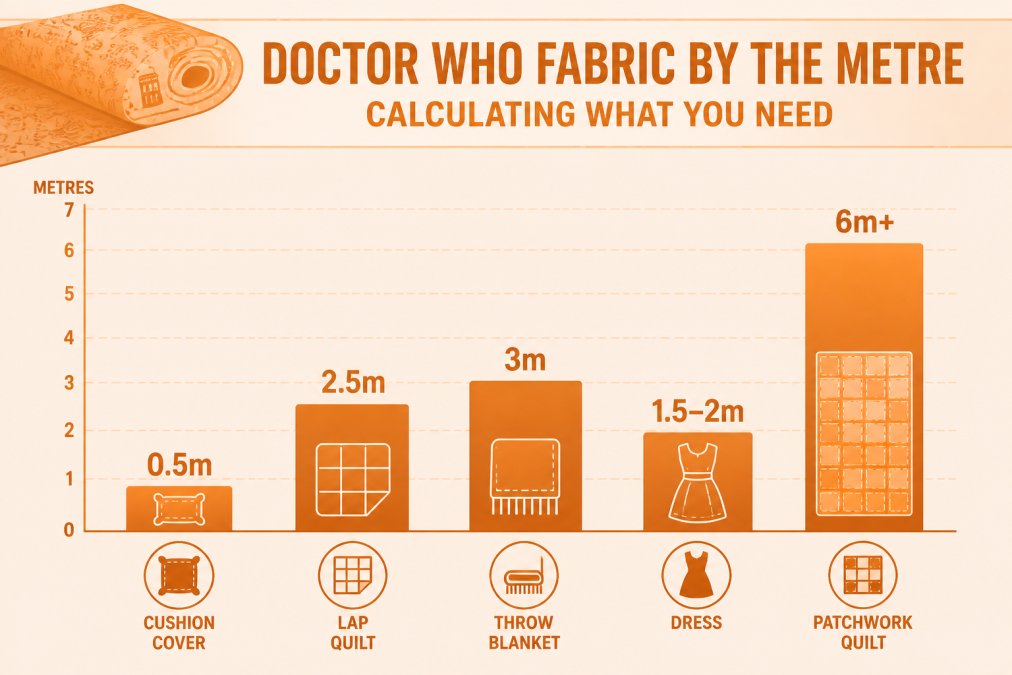
Calculating yardage for Doctor Who fabric in the UK requires understanding your project's dimensions and accounting for seam allowances and shrinkage. Most quilting patterns specify yardage in metres or yards; fabric is typically sold by the metre or in half-metre increments.
For common projects, here's a practical guide:
| Project | Approximate Yardage | Notes |
|---|---|---|
| Small cushion cover (40cm × 40cm) | 0.5m | Includes backing and binding |
| Lap quilt (127cm × 152cm) | 2.5m | Pieced design with border |
| Throw blanket (127cm × 178cm) | 3m | Simple layout with minimal waste |
| Dress or garment | 1.5-2m | Depends on pattern size and layout |
| Patchwork quilt (152cm × 203cm) | 6m+ | Multiple prints and borders |
When ordering Doctor Who fabric by the metre, add 10 percent extra to account for shrinkage during the first wash. Prewashing your fabric before cutting prevents finished projects from puckering or warping after laundering. If you're uncertain about exact yardage, it's better to overestimate slightly; leftover fabric can always be used for binding, backing, or future small projects.
Fabric Composition and Care: Cotton, Blends, and Durability
Most Doctor Who fabric in the UK is 100 percent cotton, which offers several advantages: it's breathable, holds dye well, and becomes softer with each wash. Pure cotton also presses cleanly, making it ideal for quilting and precise piecing work. However, 100 percent cotton does shrink slightly, typically 3 to 5 percent, so prewashing before cutting is essential.
Some Doctor Who fabric blends include polyester for added durability and reduced shrinkage. Cotton-polyester blends are less common in licensed quilting fabrics but may appear in apparel-weight options. Blends tend to wrinkle less and dry faster, which appeals to sewers making garments or home décor items that require frequent washing.
Care instructions vary by manufacturer, but most Doctor Who quilting cottons should be washed in cool water with mild detergent and dried on a low heat setting. Avoid bleach, which can fade the printed design. Hanging to dry or using a low tumble-dry cycle preserves colour vibrancy far better than high heat.
Project Ideas: From Quilts to Clothing and Home Décor
Doctor Who fabric in the UK works beautifully across many projects. A traditional patchwork quilt showcasing multiple Doctor Who prints becomes a statement piece, perfect for a fan's bedroom or as a substantial gift. Layer Doctor Who quilting fabric with coordinating solids, add a simple or intricate quilting pattern, and you've created something both functional and deeply personal.
Smaller projects offer quicker satisfaction. Cushion covers, tote bags, and wall hangings all benefit from Doctor Who imagery. A single Doctor Who fabric panel, framed with solid border fabric and backed with complementary cotton, becomes a finished cushion in a few hours. Tote bags constructed from Doctor Who fabric make excellent gifts for fellow fans; the durable quilting-weight cotton withstands regular use without showing excessive wear.
Home décor applications extend beyond quilts and cushions. Curtain panels featuring Doctor Who designs add personality to a room whilst maintaining functionality. Aprons, tea towels, and table runners offer opportunities to incorporate Doctor Who fabric into everyday items. Even patchwork throws draped over furniture create focal points that spark conversation.
For sewers with embroidery machines, Doctor Who fabric serves as an excellent foundation for additional embellishment. Combining printed Doctor Who designs with embroidered accents, perhaps adding machine-embroidered details using Richword thread or Sakura Thread, elevates a simple project into something truly bespoke. Pairing quality fabric with precision embroidery equipment ensures your finished work reflects both creative vision and technical excellence.
Where to Source Doctor Who Fabric and Supporting Supplies
Finding Doctor Who fabric in the UK requires knowing where licensed fabrics are stocked and understanding the difference between authorised retailers and less reliable sellers. Authorised stockists maintain quality control, offer authentic products, and typically provide customer support if issues arise.
Fabric Mouse specialises in premium fabrics, including licensed designs like Doctor Who prints, alongside an extensive range of sewing and embroidery machines. As a family-run business with decades of experience, we understand what sewers and quilters need: access to genuine, high-quality materials and expert guidance on selecting the right fabric for your specific project. Our team can help you calculate yardage, understand fabric composition, and identify which Doctor Who prints suit your intended use.
Beyond fabric, sourcing supporting supplies matters. Quality scissors, such as dedicated pin scissors for precision cutting, make a genuine difference in how accurately you can cut fabric pieces. Sewing cabinets from Sew Fine provide organised storage for your fabric collection and tools, keeping materials in good condition and your workspace functional. If you're planning substantial projects, investing in reliable equipment ensures your finished pieces meet your standards.
Online retailers, local fabric shops, and specialist stockists all carry Doctor Who fabric, but availability and stock rotation vary. Visiting a physical showroom, when possible, lets you assess fabric quality firsthand and receive personalised recommendations. If online shopping is your preference, ordering from established retailers with clear return policies and customer reviews reduces risk.
Common Mistakes When Selecting and Using Doctor Who Fabric
The most frequent error sewers make is underestimating yardage. A pattern might specify "1.5 metres," but failing to account for shrinkage, pattern matching, or generous cutting margins often leaves you short. Always add 10 percent extra and verify your calculations before placing an order.
Another common pitfall is choosing fabric weight without considering the project's end use. Doctor Who apparel-weight cotton, for instance, is thinner and more drape-friendly than quilting weight but less suitable for quilts or heavily used items. Conversely, using heavy canvas-weight fabric for a garment results in stiffness and discomfort. Understanding the distinction prevents costly mistakes.
Neglecting to prewash fabric leads to problems after project completion. A quilt or cushion cover that shrinks unevenly after first washing can warp, pucker, or develop misaligned seams. Prewashing takes time but prevents heartbreak later.
Finally, many sewers purchase Doctor Who fabric without a concrete plan, assuming they'll "find a use for it eventually." Fabric stored without a project in mind often remains unused indefinitely. Before ordering, identify your specific project, calculate exact yardage, and commit to a timeline. This approach ensures your investment translates into finished work you'll treasure.
Selecting the right Doctor Who fabric in the UK transforms a simple sewing project into something meaningful. Whether you're creating a keepsake quilt for a fellow fan or a practical cushion cover for your own space, understanding fabric weight, weave, composition, and yardage requirements ensures success. At Fabric Mouse, we're here to help you navigate these choices with expert guidance, quality materials, and the supporting supplies that make your creative vision a reality. Get in touch with our team to discuss your project or explore the full range of Doctor Who designs and premium equipment we stock.
Frequently Asked Questions
Where can I buy Doctor Who fabric in the UK?
Doctor Who fabric is available from specialist online retailers, fabric shops, and craft suppliers across the UK. When ordering, check whether you're buying pre-cut panels, fabric by the metre, or bundles. Many retailers offer fast delivery options. Contact Fabric Mouse directly for current stock, availability, and to discuss your specific project needs; expert staff can guide you to the right product for your requirements.
Is Doctor Who fabric suitable for quilting projects?
Yes, Doctor Who quilting fabric works well for quilts when you choose the correct weight. Look for 100% cotton quilting-weight fabric (around 140-150 gsm), which is ideal for patchwork, appliqué, and pieced quilts. Pre-cut panels are particularly popular for quilters because they eliminate measuring and cutting time. Always check the fabric composition before purchasing to ensure it meets quilting standards and will hold up through washing and use.
What can I make with Doctor Who fabric?
Doctor Who fabric works for quilts, cushion covers, throw blankets, tote bags, bunting, patchwork projects, and home décor items. Lighter-weight options suit clothing like shirts, dresses, and skirts. Panels are ideal for quick projects like wall hangings or small quilts, whilst fabric by the metre gives you flexibility to design custom pieces. Consider the fabric weight and your project's durability needs before selecting your material.
How much Doctor Who fabric do I need for a project?
Requirements vary by project. A small cushion cover needs around 0.5 metres, a lap quilt typically requires 2.5-3 metres, and a throw blanket needs 3 metres or more. Patchwork quilts often need 6 metres or more depending on design complexity. Pre-cut panels come in standard sizes, so check panel dimensions before purchasing. Measure your project carefully and add 10% extra for shrinkage and mistakes.
Moda French General Fabric: A Guide for UK Sewers
Lightweight Sewing Machine: A 2026 Review
Related Posts

Sewing Machine Needle Types Explained

Lightweight Sewing Machine: A 2026 Review

Moda French General Fabric: A Guide for UK Sewers

Moda Jelly Rolls: A Complete Guide to Quilting

Guess How Much I Love You Fabric: Projects & Ideas

Lord of the Rings Fabric: A Guide for Quilters
