

9 Benefits of Industrial Overlockers for Garment Production
Quick Summary
Industrial overlockers trim and enclose a fabric edge in one pass, producing a neat, stretchable seam that suits garment production at volume. Their main benefits are speed, durable seams that flex with the garment, and reduced hand-finishing. They do not replace a sewing machine for topstitching, buttonholes or zips.
- Overlockers finish and join edges that need to stretch, while sewing machines handle topstitching, buttonholes and zips.
- Test a representative garment before and after the change, including re-threading and rework time.
- Multiply the minutes saved per garment by weekly output to get weekly labour hours saved.
- Compare your reject and rework rate after switching, as rework consumes both labour and material.
- Match fabric weight and stretch to the stitch configuration, using differential feed for knits.
Table of Contents
- What an Industrial Overlocker Does in Garment Production
- Industrial Overlocker vs Sewing Machine: Where Each Earns Its Place
- Clean, Durable Seam Finishes That Hold Up to Wear
- Production Speed and Throughput: Measuring the Gain
- Stretch and Knit Fabrics: Why Overlockers Handle Them Better
- Three-Thread vs Four-Thread Overlockers: Which Stitch Suits Your Work
- How to Choose an Industrial Overlocker for Your Workload
- Pros, Cons and When an Overlocker Is Not the Right Machine
- Maintenance, Setup and Support for Your Next Production Run
- Frequently Asked Questions
This guide from Fabric Mouse covers the main advantages and the trade-offs so you can judge whether an industrial overlocker suits your workload. In short, an industrial overlocker trims and encloses a fabric edge in one pass, producing a neat, stretchable seam that a standard domestic machine struggles to match at volume.
Last Updated: 12 November 2026
What an Industrial Overlocker Does in Garment Production
An overlocker, also called a serger, uses one or more needles together with loopers to stitch over the cut edge of fabric while trimming it. The result is an overedge stitch that neatens raw edges, reduces fraying and joins seams in a single operation.
Industrial models run faster, handle heavier fabrics and are built for continuous use.
Overview of overlock stitch types and seam construction
Industrial Overlocker vs Sewing Machine: Where Each Earns Its Place
A sewing machine makes a lockstitch and is the right tool for topstitching, buttonholes, zips and decorative work. An overlocker cannot replace it, but it does a different job well: finishing and joining edges that need to stretch.
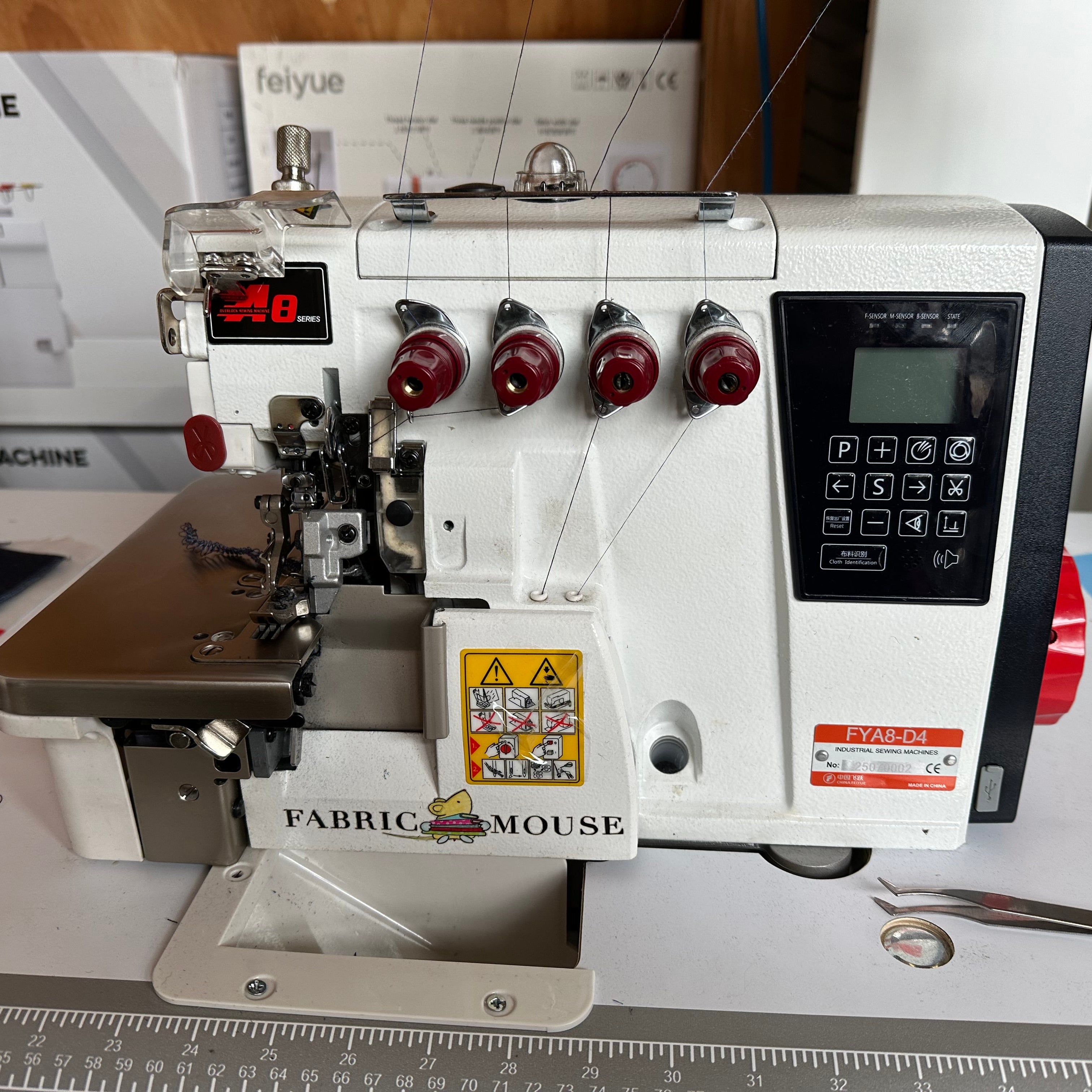
If your garments are mainly woven and you sew few seams per piece, a standard machine may be enough. Once you are cutting and sewing many seams a day, the overlocker starts to pay for itself. Our FEIYUE FYA8-D4 Industrial Overlocker is an industrial overlocker for repeated edge finishing, with a servo motor and automatic thread cutting.
Clean, Durable Seam Finishes That Hold Up to Wear
Overlocked seams enclose the raw edge and flex with the garment.
A common mistake is choosing thread weight or stitch width by guesswork. Test on a scrap of the actual fabric, check that the seam stretches without puckering, and only then run the batch. Contact us to help match the setup to your material.
Production Speed and Throughput: Measuring the Gain
Speed is the benefit most makers ask about, but 'faster' is not a business case. The useful question is how much labour time the machine removes per garment, and whether that saving, multiplied across your output, justifies the outlay.
Build a simple before-and-after test
Take one representative garment from your range. Time the edge-finishing and seam-joining operations as you currently do them, by hand, on a domestic overlocker, or on your existing machine, including the time spent re-threading, adjusting tension and reworking seams that fail inspection. Then time the same operations on the industrial overlocker, again including changeover and any rework.
The difference in minutes per garment is your unit saving. Multiply it by your weekly output to get weekly labour minutes saved, then convert that to hours. That figure is the honest measure of throughput gain, and it will be different for every workroom.
Account for rework and rejects
Labour time is only part of the picture. Overlocked seams that are consistent reduce the number of garments pulled for fraying, puckering or skipped stitches. Count your current reject and rework rate over a typical week, then compare it after the change. A modest reduction in rework often contributes as much to effective throughput as raw stitching speed, because rework consumes both labour and material.
Work out the payback
With a weekly labour-hour saving and a reduced rework figure, you can estimate how many weeks of production it takes for the saving to cover the machine's cost. Use the current listing price rather than a remembered figure, and include the running costs you will actually incur, such as thread, needles and servicing. A machine that is faster but demands more frequent blade changes or servicing may have a longer payback than the headline speed suggests.
Factor in changeover and setup
In real production, machines spend time being set up as well as running. If you change thread colours or stitch configurations often, threading method and setup guidance affect your effective throughput as much as motor speed.
The article sets out a simple way to measure the real throughput gain, which the table below summarises.
| Step | What to measure | Note |
|---|---|---|
| Build a simple before-and-after test | Time one representative garment, before and after | Include re-threading, tension adjustment and rework |
| Calculate unit saving | Difference in minutes per garment | Multiply by weekly output to get labour hours saved |
| Account for rework and rejects | Count reject and rework rate over a typical week | Compare the rate after the change |
| Work out the payback | Weekly labour-hour saving and reduced rework | Use current listing price plus running costs |
| Factor in changeover and setup | Thread colour and configuration changes | Setup time affects effective throughput |
Stretch and Knit Fabrics: Why Overlockers Handle Them Better
Knits and stretch fabrics are where overlockers earn their keep. Differential feed, where present, helps control fabric as it passes under the foot.
Pick a needle and thread suited to the fabric and test before committing to a run. Ask us about the supported stitch setups for your material, especially for particularly bulky or layered work.
Three-Thread vs Four-Thread Overlockers: Which Stitch Suits Your Work
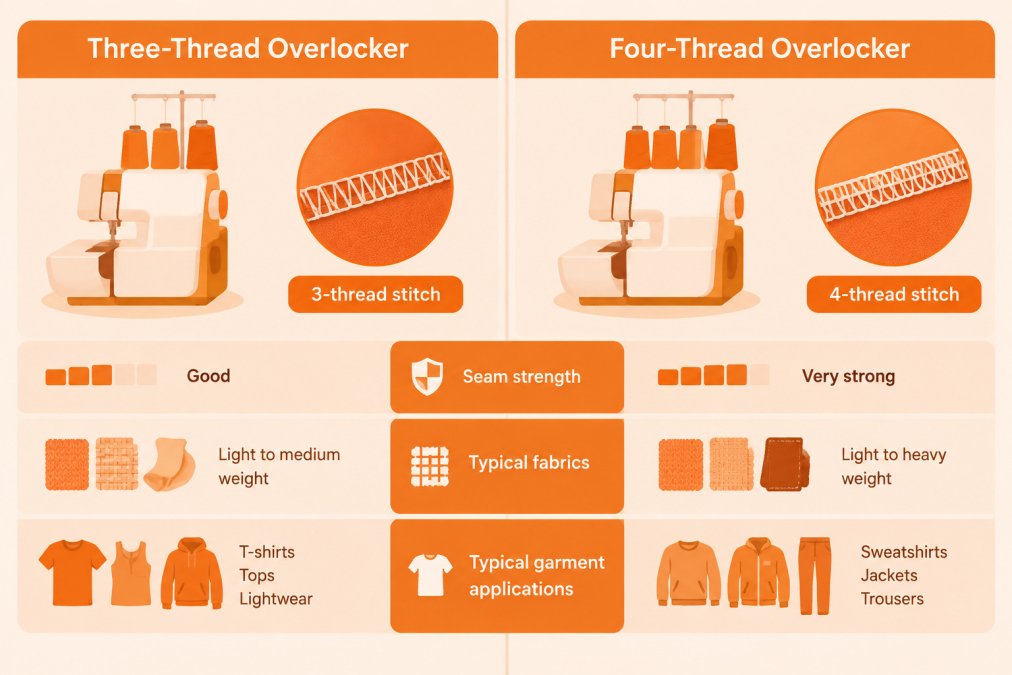
Three-thread overlockers produce a narrower seam and are well suited to lightweight fabrics and edge finishing. Four-thread stitches add a second line of stitching for a stronger seam.
If you want to compare configurations side by side, the Janome AT2000D AirThread Overlocker supports 2, 3 and 4-thread stitching, which makes it a useful reference point when you are deciding how many threads your work really needs.
How to Choose an Industrial Overlocker for Your Workload
Machine selection is where most buyers get it wrong, because the headline speed figure is the least useful number on the specification sheet. Work backwards from the garment instead: the fabric, the seam type, the stitch configuration and the weekly volume together determine which machine will actually earn its floor space.
Start with the fabric
Fabric weight and stretch drive almost every downstream choice. Lightweight wovens such as voile or lining cloth suit a narrower three-thread overedge, which keeps bulk out of the seam. Medium wovens, cotton poplin, twill, denim shirting, generally want a four-thread configuration for strength. Knits and stretch fabrics need differential feed so the seam can stretch with the garment without rippling, and a stitch that recovers after being pulled.
Heavy or layered work, denim hems, fleece, bagged-out seams, puts different demands on the machine: a heavier needle system, a more powerful motor and a cutting mechanism that copes with thickness without stalling. A machine that sails through jersey can labour badly on a four-layer denim seam.
Match the stitch configuration to the seam
Three-thread overlock is the workhorse for edge neatening and lightweight seam finishing. Four-thread overlock adds a second needle line for a stronger, more secure seam and is the usual choice where the overlocked seam is also the construction seam. Five-thread safety stitch combines an overedge with a chainstitch and is common in workwear and heavier garments where seam strength is critical. Two-thread configurations are useful for rolled hems and narrow finishes on lightweight fabrics.
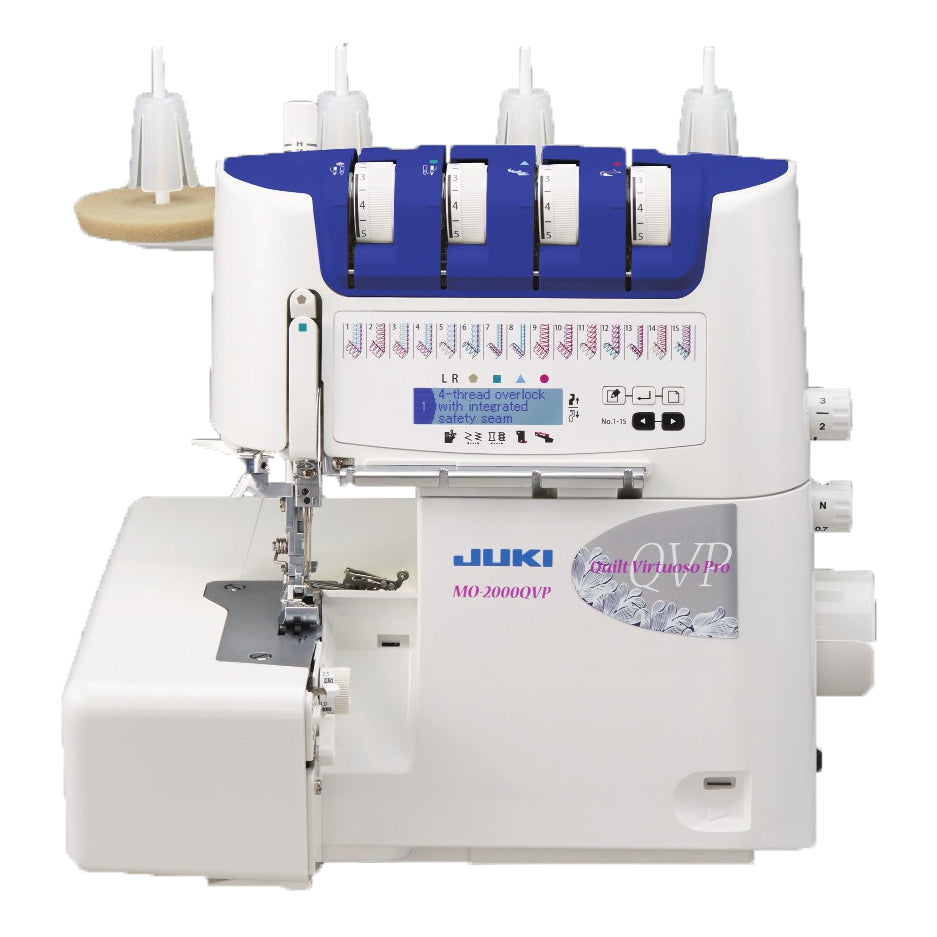
If your range spans several garment types, a machine that supports multiple thread configurations gives you more flexibility than one locked to a single setup. The Janome AT2000D AirThread Overlocker supports 2, 3 and 4-thread stitching, which makes it a useful reference point when you are deciding how many threads your work really needs.
Size the machine to your volume
Weekly output, not peak output, should set the specification. Consider how often you change thread colours and configurations: air threading and on-screen guidance shorten changeover, which matters more as your batch count rises.
Check the practical fit
Before committing, confirm the table height and footprint against your workroom, the power supply the motor requires, and whether the machine needs a dedicated table or comes as a complete unit. Ask about the thread and needle types the machine is set up for, and whether the accessories you need for your chosen configuration are included.
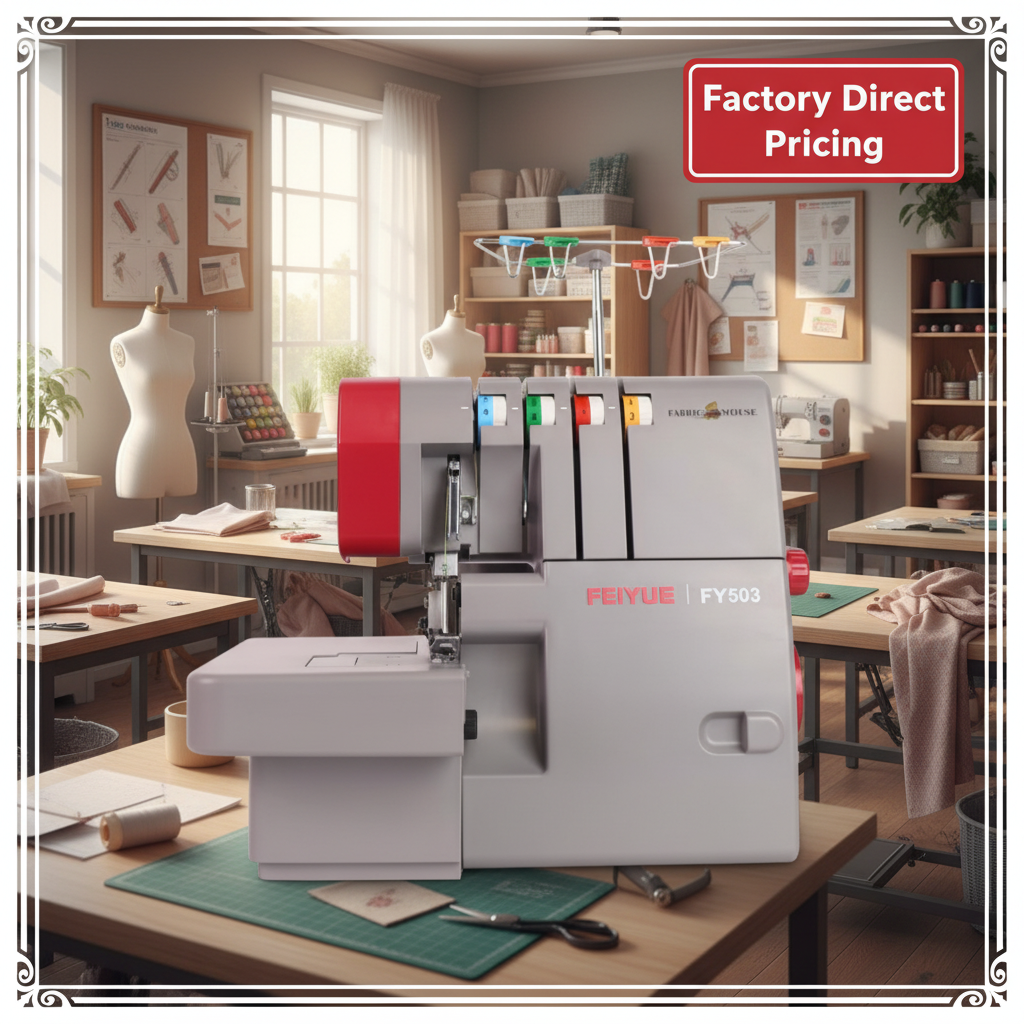
Watch out: a machine demonstrated on one fabric can behave very differently on another, so ask to see it running on a sample close to your actual material before you buy. For a manual-threading option aimed at everyday finishing, the FEIYUE FY503 Heavy Duty Overlocker is worth comparing, and you can contact us to talk through your project details.
Pros, Cons and When an Overlocker Is Not the Right Machine
The main advantages are speed, durable and stretchable seams, neat edges and reduced hand-finishing. The drawbacks are cost, floor space, the need for a dedicated table and a learning curve for threading and tension.
An overlocker is not the right machine for topstitching, buttonholes, zips or decorative detail, and it will not replace a sewing machine in most workrooms. If your output is low or your fabrics are predominantly stable woven, a domestic overlocker may serve you better. Be honest with yourself about volume before buying.
Maintenance, Setup and Support for Your Next Production Run
Industrial overlockers need regular cleaning, correct oiling and periodic checks. Maintenance steps and oil types differ between models, so always follow the manufacturer's manual for your exact machine rather than applying general advice.
Plan ahead for downtime. Check stock and delivery before you order, as supplier-ordered machines carry an estimated lead time. Our Juki MO-2000 QVP Air Threading Overlocker offers air threading and on-screen setup guidance. For demonstrations and individual help with your machine, visit our demonstrations and expert advice page, or contact us to talk through your production needs.
Ready to find the overlocker that fits your workload? Get in touch with Fabric Mouse for expert guidance on choosing, setting up and supporting your industrial machine.
Frequently Asked Questions
What is an industrial overlocker used for in garment production?
An industrial overlocker trims the raw edge of fabric and wraps it in overlock stitches in a single pass, which neatens the edge and joins seams at the same time. In garment production it is used for finishing seams on knit and woven fabrics, closing side seams and necklines, and neatening hems before the garment moves on. Our FEIYUE FYA8-D4 industrial overlocker is one example of a machine built for this kind of repeated edge-finishing work.
Can an overlocker sew and finish a seam at the same time?
Yes. An overlocker sews a seam and finishes the raw edges in one operation, because the looper threads wrap the fabric edge as the seam is formed. This is why it saves time compared with sewing a seam on a standard machine and then finishing the edge separately. Seam allowances must be cut to a suitable width for the machine, and the thread setup should match the seam type. Test your settings on a scrap of project fabric before sewing the garment.
What is the difference between a three-thread and four-thread overlocker?
A three-thread overlocker uses two loopers and one needle, producing a lighter, more flexible overedge stitch that suits knits and stretch fabrics. A four-thread overlocker uses two needles alongside the loopers, creating a stronger, more durable seam that is better for woven fabrics and seams under stress. The right choice depends on the fabric and the strength the seam needs, so check which stitch configuration your chosen model supports.
How do I choose an industrial overlocker for my workload?
Start with the fabrics and seam types you sew most often, then match the machine's stitch options and thread capacity to them. Consider how many hours you will run it each week, since that determines whether you need a heavier-duty machine. Check the servo or motor type, the differential feed, and whether automatic thread cutting suits your workflow. Contact Fabric Mouse with your project details so we can help you consider suitability for your seams.

Related Posts

Cleaning Sewing Machine Feed Dogs: A Practical Step-by-Step Guide

How to Adjust Sewing Patterns for a Full Bust

How to Calculate Fabric Yardage for Beginners

How to Clean and Oil Your Embroidery Machine Properly

How to Sew with Cotton Jersey Fabric: A Practical Guide

Choosing Embroidery Software for Beginners: A Practical Guide
